

Top photo: Francisco Arrais
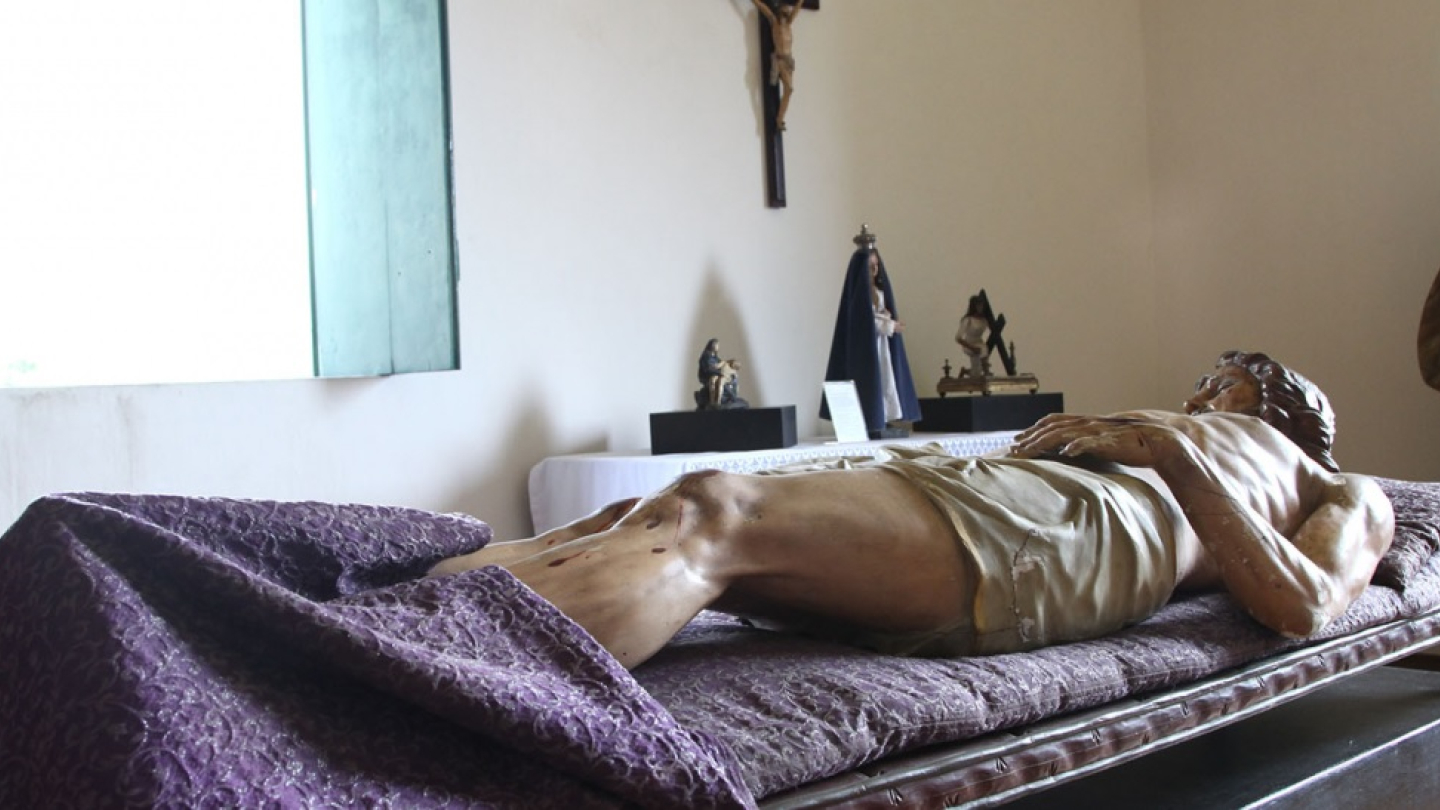
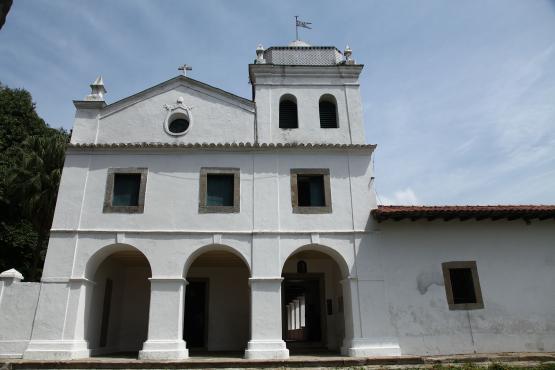
The Benedictine architectural complex composed of the Igreja Nossa Senhora do Desterro (Our Lady of Exile Church) and the old São Bento (Saint Benedict) Monastery is the Santos Museum of Sacred Art today. It was inaugurated on June 11, 1981, on the initiative of the then Diocesan Bishop Dom David Picão.
The collection brings together more than 600 sacred and religious pieces, both erudite and popular, from the 16th to the 20th century, including sculptures, paintings, liturgical objects and vestments. The oldest statue in Brazil with a known artist is part of the collection: Our Lady of the Conception, dated 1560, by João Gonçalo Fernandes.
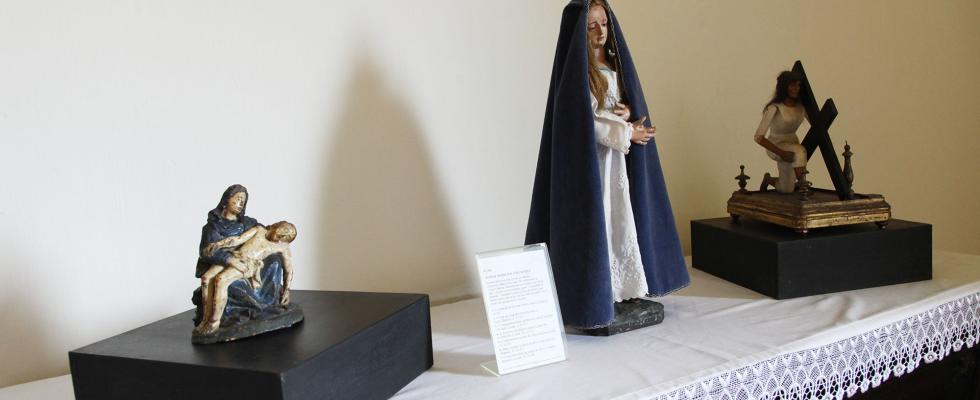
Main Hall
The Main Hall features sculptures made of wood and terracotta, created between the 16th and 18th centuries. Among the works, the image of Saint Catherine of Alexandria, dating from approximately 1540, stands out; it belonged to the first chapel built in the town of Santos. The collection includes works by Benedito Calixto, Gentil Garcez, José Patrício da Silva Manso, Marino Del Favero, Guiomar Fagundes, and other renowned artists. The collection of images known as ‘paulistinhas’ (little Paulistas) refers to popular religious art and was widely used in home oratories and by the bandeirantes (explorers/pioneers), who carried small sculptures as amulets on their journeys.
Photo: Tadeu Nascimento
Monastery
The monastery, which for centuries served as a residence for Benedictine monks, has three floors and is composed of a church, sacristy, cloister, cells (rooms), halls and other spaces. The building also sheltered victims of the epidemics that plagued the city of Santos, especially in 1874, and functioned as a boarding school, between 1958 and 1968, for young Russian refugees.
Photo: Raimundo Rosa
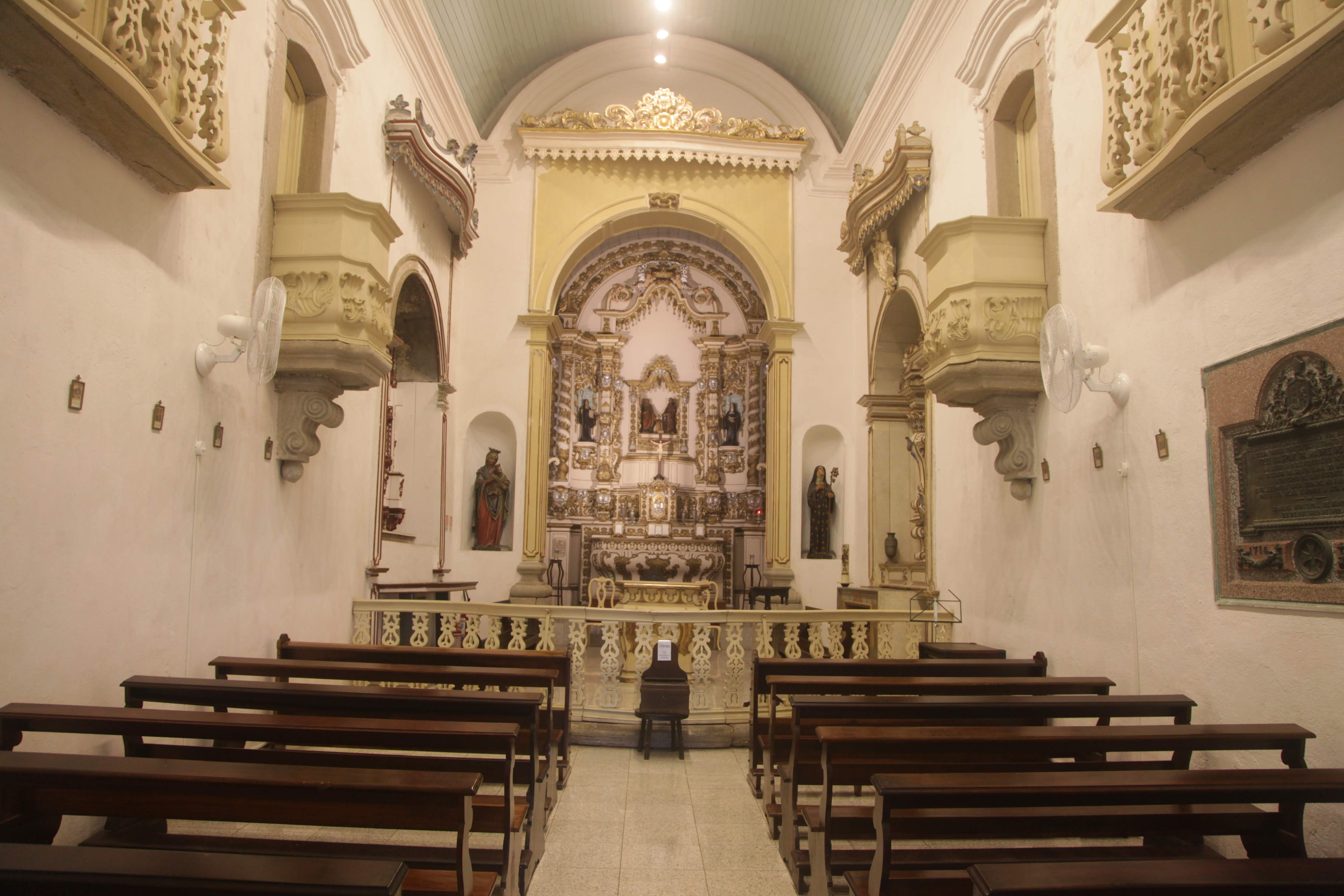
Chapel of Nossa Senhora do Desterro
The Chapel of Nossa Senhora do Desterro, dating from 1630, features an 18th-century altarpiece characterized by its Baroque style, which depicts a wealth of decorative ornaments referencing Marian devotion, such as floral motifs (roses, sunflowers, daisies), crowning and shells, as well as Christian symbols like angels, a pelican, and acanthus leaves.
Photo: Raimundo Rosa