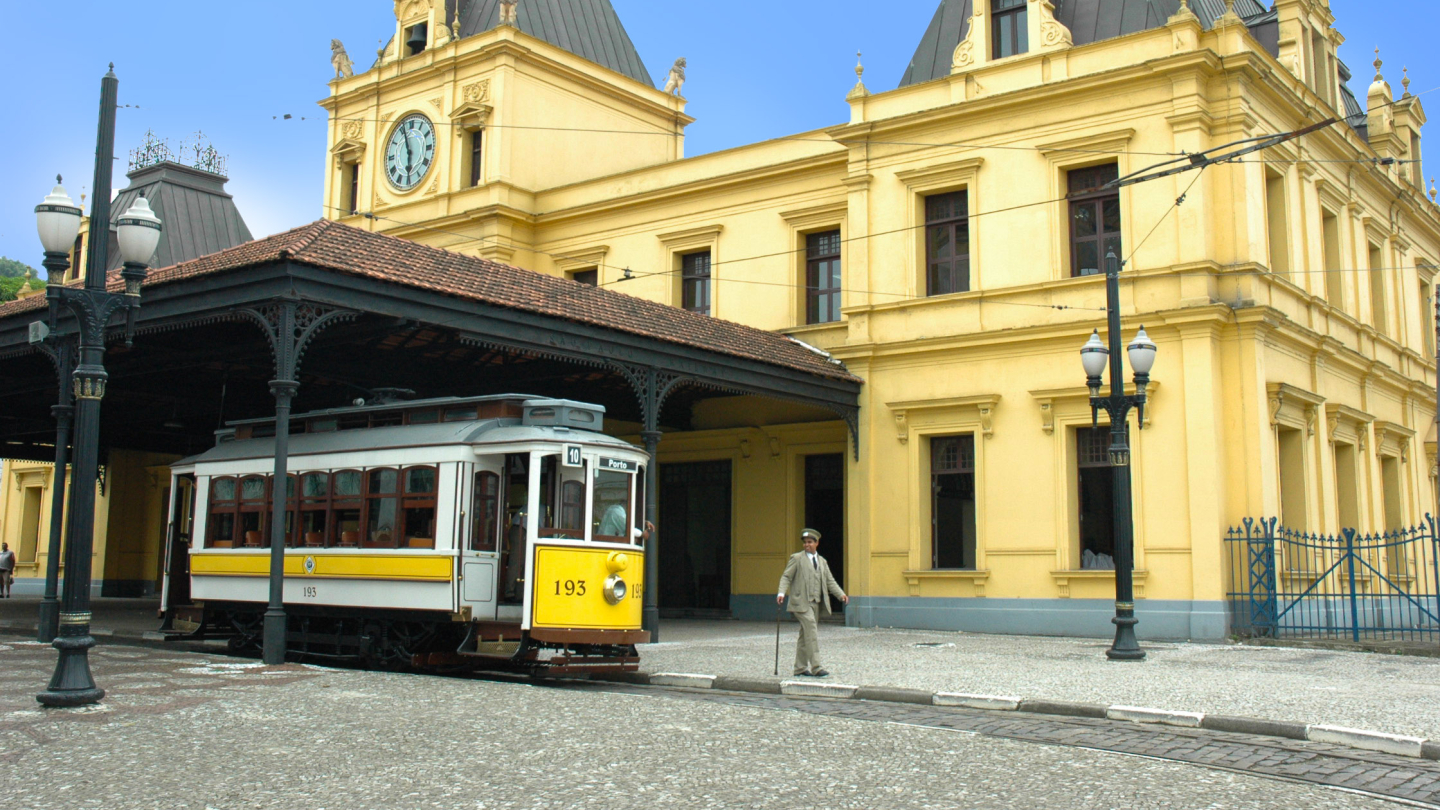


Top photo: Francisco Arrais
The Tourist Streetcar ride offers a true voyage back in time via 40 points of historical and cultural interest. With departures from Valongo station – built in 1867 for the first railroad in São Paulo – the electric streetcars from the 19th and 20th centuries travel through the Historic Center, accompanied by a tour guide.
They are original vehicles, originating in Scotland, Portugal and Italy, making Santos the first Living Streetcar Museum in Latin America. Drivers and conductors wear replicas of the original uniform from the time when the streetcars were the city’s main means of transport.
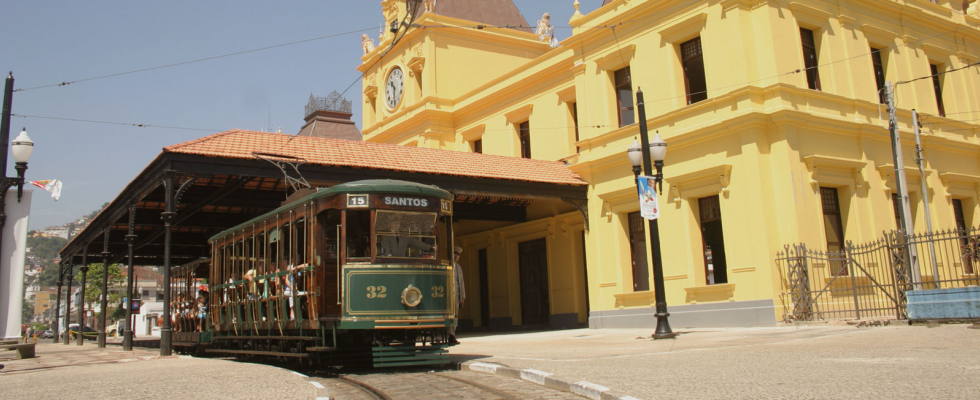
Open Streetcar nº 32
Built in 1911, nº32 is the oldest electric streetcar in the country. It came from Scotland and the interior is decorated with advertisements from the 1950s, and there is a double running board, which, in the last century, made access easy for women in skirts and dresses. The nine bench seats and steps are original, and the embellished driver’s seat, entirely reworked, was restored after research through old photos. The vehicle can carry 45 passengers and joined the Tourist Streetcar fleet on September 23, 2000.
Photo: Anderson Bianchi
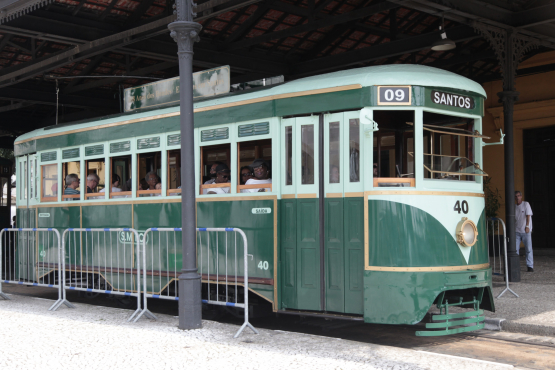
Closed street car nº 40
With original Scottish mechanics, the ‘shrimp streetcar’, no 40, is from 1911. Made from cabreuva wood, which is under threat of extinction, and hammered glass, it was redesigned in the 1950s, when its bodywork was modernized. Able to carry 28 passengers, it is decorated with advertisements from the time when streetcars circulated in Santos. Identical to those used in the city up to the 1970s, this streetcar can reach up to 50kph.
The name ‘shrimp streetcar’ comes from the original color of the bodywork: red. It joined the tourist streetcar fleet on January 26, 2002 and, in June 2011, was transformed into the Whale Streetcar, in honor of Santos Football Club’s becoming three times champions of the Libertadores Cup. The inside was decorated with images of the titles in 1962, 1963 and 2011. It returned to service in September 2013 with its original silver and red paintwork and since April 2017 has been its current color, green.
Photo: Ronaldo Andrade
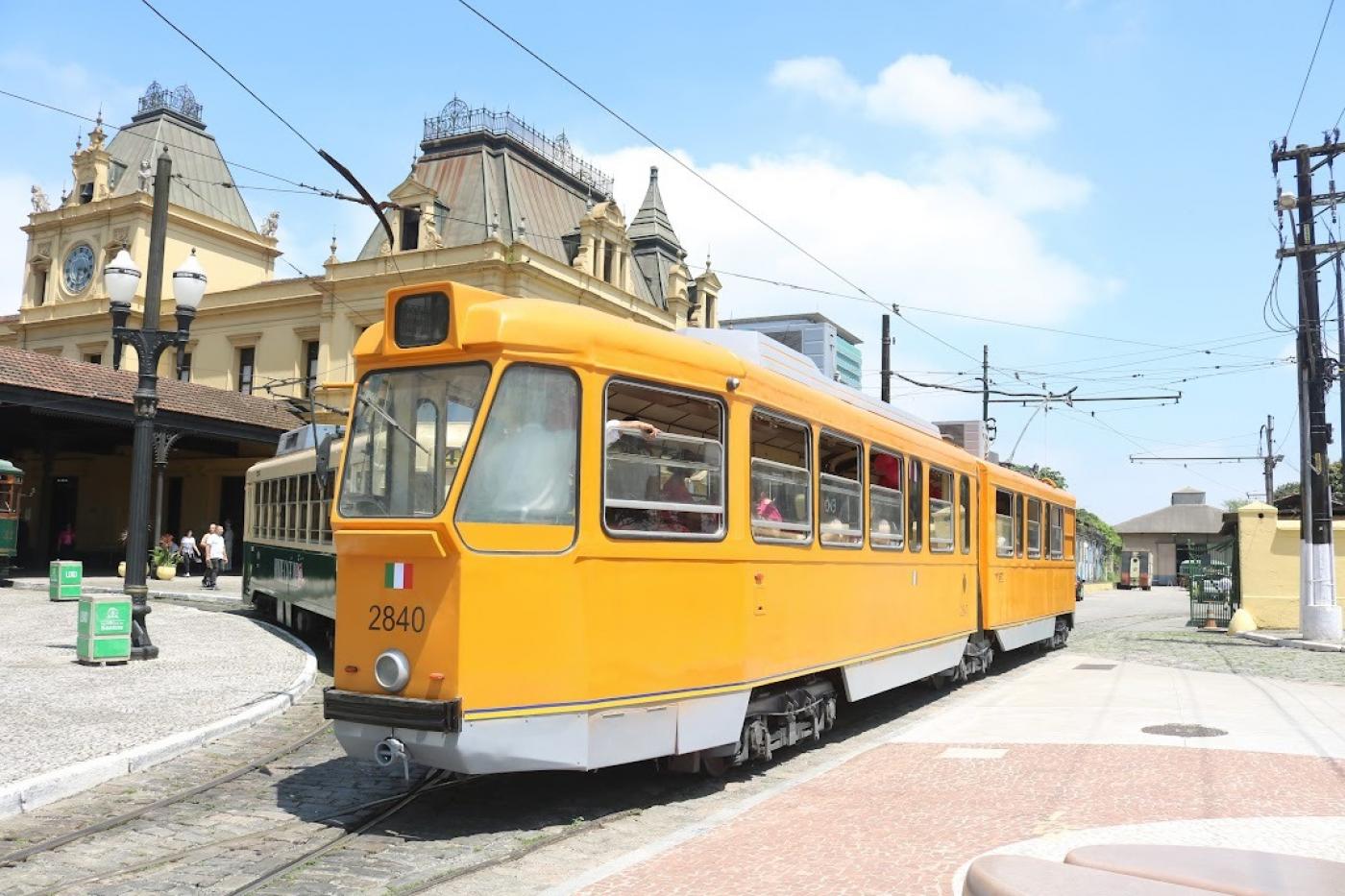
Italian Streetcar
With internal décor inspired by concrete art, which takes us back to the 1930s and 1950s, when it was built and renovated, with 36 seats, mounted on an articulated platform, it is 20 meters long, boasts a kitchen with microwave oven, electric oven, and cooktop; air conditioning; bathroom and accessibility for passengers with special needs. The interior is inspired on the work’ Plano em Superfície Modulada’ (Planes in Modulated Surface) (nº 5 1957), by Lygia Clark. The vehicle was donated by Turin city Hall (Italy).
Photo: Santos City Hall Archive
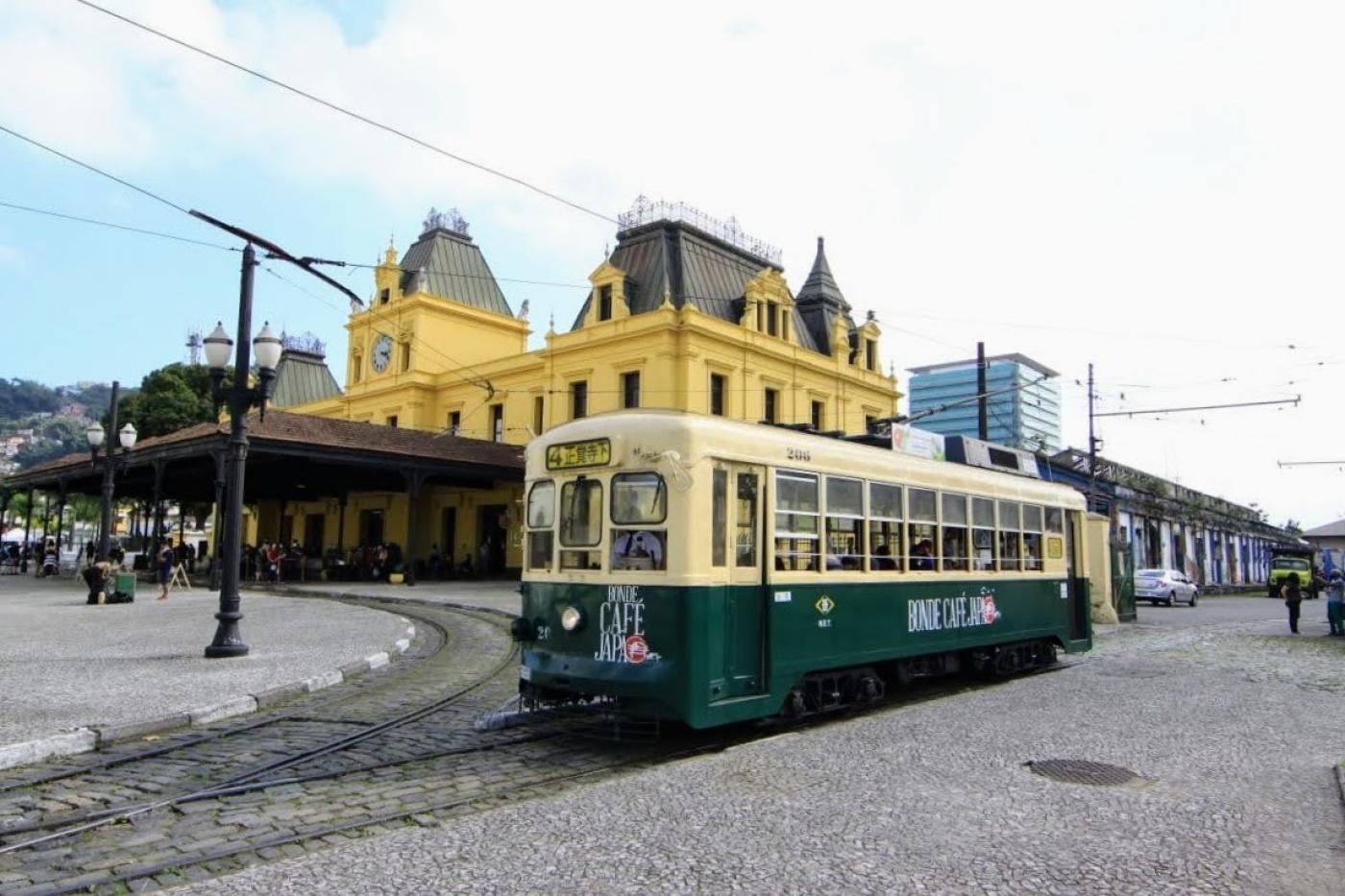
Japanese Streetcar
Built 1953 at Nagasaki, it received prefix number 206 and circulated for over 60 years in the hometown. It became part of a modern mobility plan in the years after the atomic bomb disaster at the final stage of World War Two.
The vehicle is the subject of a 2016 friendship donation agreement. After a 42-day overseas voyage from Nagasaki to Santos, it underwent a 3-year extensive refit throughout in its structure technic not neglecting its cultural aspects aiming to the resumption of the former inboard communication scheme.
It offers facilities for 28 passengers sitting and plays an important roll in the old side of Santos town tourism.
Photo: Santos City Hall Archive
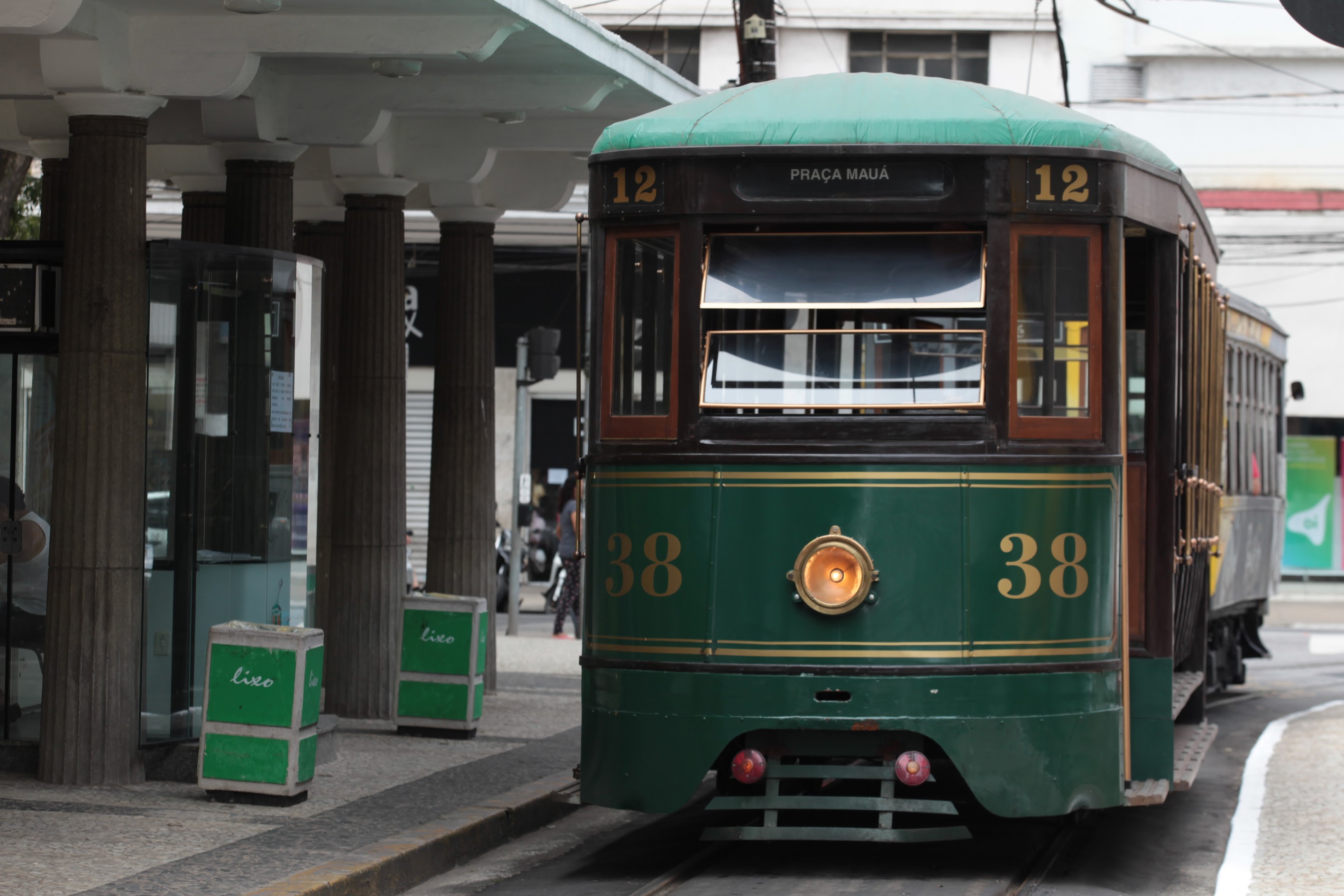
Trailer 38 (large)
Donated by the city of Votorantim (SP), no 38 is the second – and largest – trailer to circulate in the city. With a capacity for 42 passengers, it began operations in January 2016. It is actually an old open streetcar from the Brazilian Association of Railway Preservation, exhibited in Campos do Jordão (SP).
Photo: Francisco Arrais
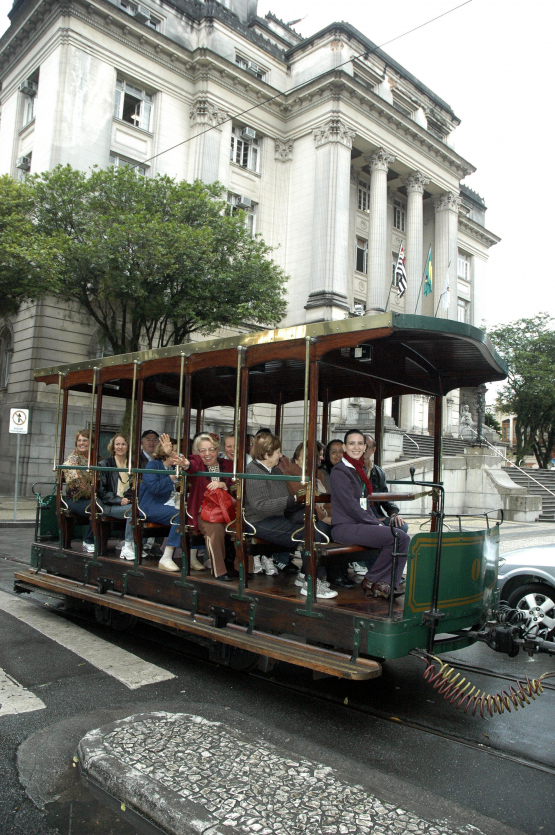
Small trailer
An old wagon pulled by animals, from 1871, it has been adapted to function as a trailer. With seating for 24, it has been part of the Tourist Streetcar Line since November, 2000.
Photo: Marcelo Martins
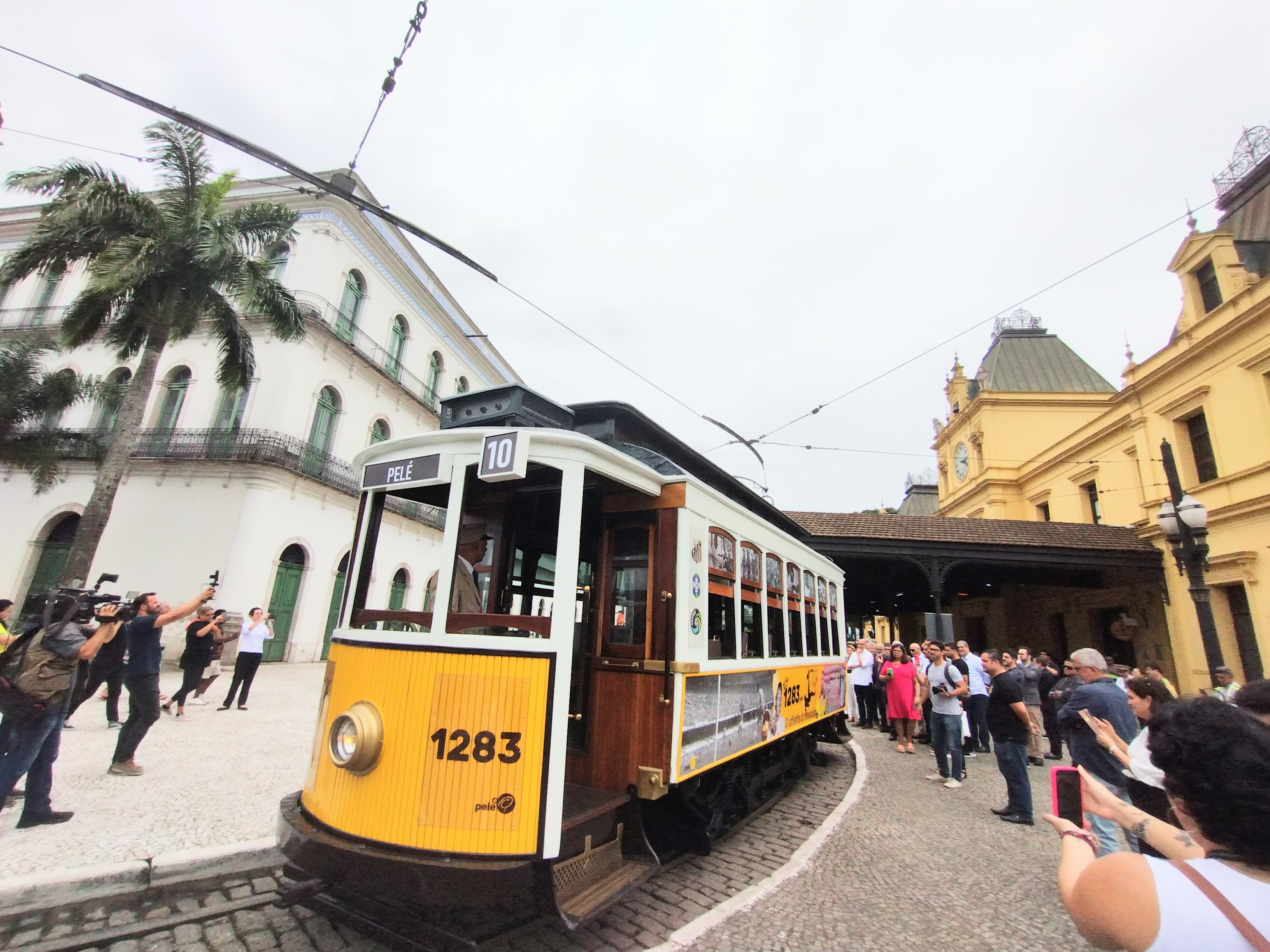
Pelé Streetcar
The number 193 tram, styled as a tribute to Pelé, is almost 100 years old. It is an original from the tram system of Porto, Portugal, and underwent a meticulous restoration process. The work included replacing various wooden structures and a complete electrical and mechanical overhaul. It also received a multimedia system with two 24-inch TVs, which allows for the display of two special videos during the ride: one about the player's history and career, and another about the Pelé Museum, located in Valongo.
The entire external layout is a tribute to the King of Football and showcases his main achievements. It starts with the number that replaces the original 193. It is now numbered as 1,283, which corresponds to the total number of goals scored by Pelé, a record recognized by the Guinness Book. The art on the sides of the vehicle features this new number amid about 20 photos of the player on the field for Santos and the Brazilian National Team; in a game between the São Paulo and Rio de Janeiro state teams; alongside teammates and great names in football, such as Garrincha; and at the signing of his first contract, among other records. There are also references to the Jules Rimet Trophy (permanently won by Brazil after becoming three-time world champions in 1970), his famous goal celebration with a punch in the air, and the bicycle kick.
Foto: Cecília Dias
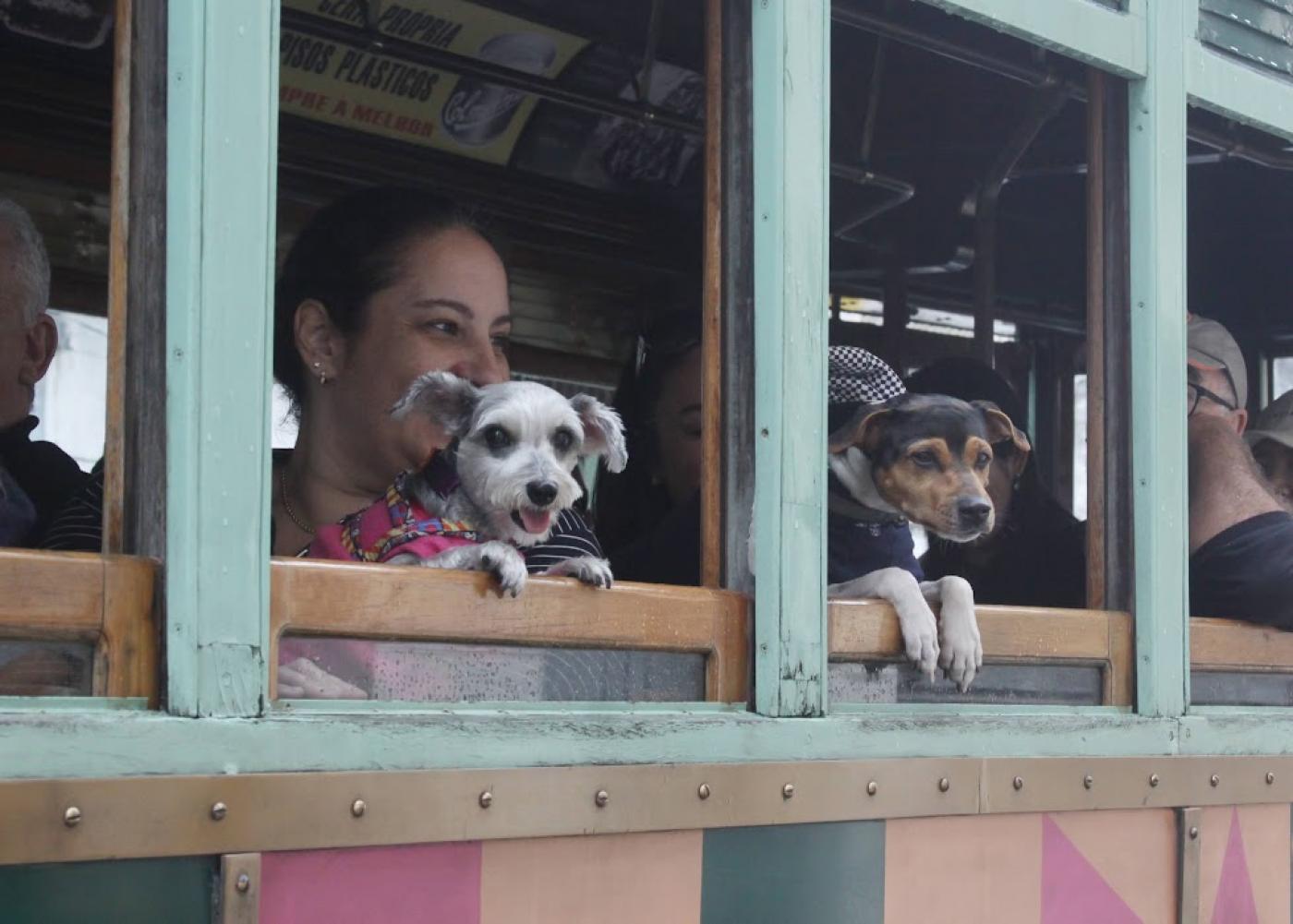
The Pet-Friendly Streetcar
IMPORTANT: The 'Pet-Friendly Streetcar' ride happens only on specific occasions, on dates previously set by the Secretariat of Tourism, Commerce, and Entrepreneurship (Setur) and announced on the social media channels of Turismo Santos.
RULES
Pets must be on a leash, with a collar, and accompanied by an adult guardian. According to law nº 11.531/2003 and decree nº 48.533/2004, some breeds are required to use a short lead, a choke collar, and a muzzle: Pit Bull, Rottweiler, Neapolitan Mastiff, American Staffordshire Terrier, Bullmastiff, Doberman, Fila Brasileiro, Dogo Argentino, Rhodesian, Bull Terrier, and American Bully.
GUARDIAN'S RESPONSIBILITY
Every guardian is exclusively responsible for the behavior of their dog and its actions, excluding any responsibility from the Municipality of Santos and/or its employees, including in the case of damages caused to or suffered by other animals, people, and/or the tram during the ride, as per article 936 of the Civil Code.
Photo: Carlos Nogueira.
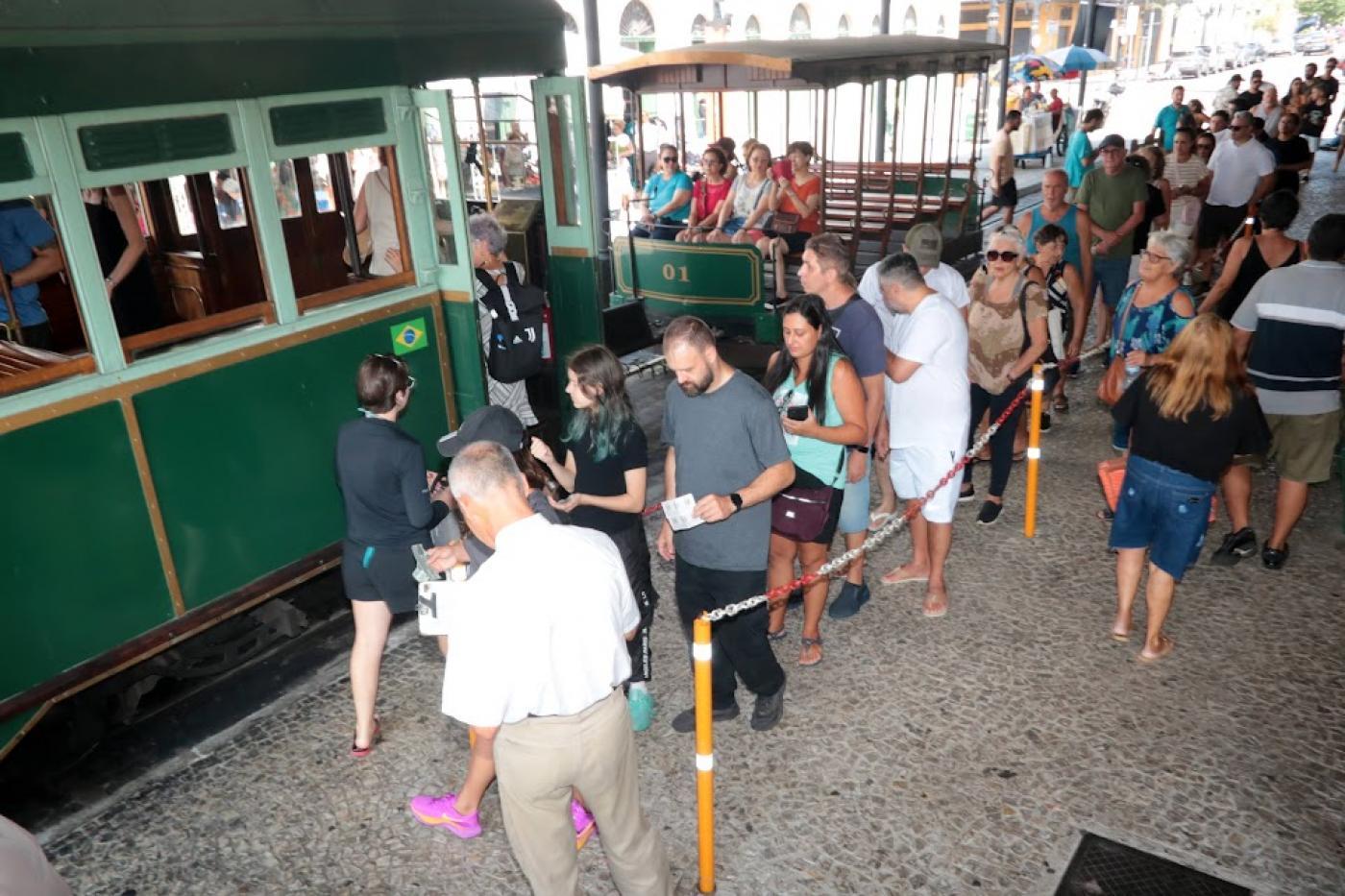
Group Bookings
Rules and information about GROUP BOOKINGS for the streetcar ride:
- Bookings for groups of 11 to 45 people must be made online, with a minimum of nine (9) days' notice (the sooner you book, the better), through the website egov.santos.sp.gov.br/turismo. Note: A group of fewer than 11 people does not need to book online. They can simply go to the tram ticket office, purchase tickets according to the available times, and take the ride.
- Each registration can make a maximum of five (5) bookings on Sistur. As the rides take place, the system opens up space for the user to make new bookings, up to the limit of five (5) bookings per registration.
- To give all users an equal opportunity, it's essential to only book the times you will actually use.
- For the Traditional Tram, the minimum number of passengers allowed is 11 people, and the maximum is 45 people. Note: Trams are old equipment that requires constant maintenance, so we can't always count on all types of trams at the same time, and each tram has a different and limited capacity. Therefore, it is essential not to exceed the maximum number of people allowed on Sistur, which is 45 seats.
- On Sundays, public holidays, optional holidays, long weekends, and during holiday seasons (July, December, January, and February), we DO NOT make bookings on Sistur, as the number of visitors increases.
- The booking TIMES available on Sistur for the Traditional Tram are: Tuesday to Friday, at 10 a.m., 10:30 a.m., 11:30 a.m., 12:30 p.m., 1:30 p.m., 2:30 p.m., 3:30 p.m., and 4:30 p.m., and on Saturdays, at 10 a.m. and 10:30 a.m.
- The user must fill out the booking form carefully and with correct information, as this information will be checked by the ticket office.
- Pay attention to the automatic cancellation, as nine (9) days before the booking date, the system sends the user an email with a key that must be activated to confirm the ride. If the user does not confirm within three (3) days before the date, the system cancels the booking and notifies the user by email.
- The duration of the ride may be from fifteen to twenty-five minutes. The route may be altered (shortened) without prior notice, or the ride may be canceled if there is a technical problem with the electrical network or the route, or for other reasons that prevent the tram from passing, but the fare will not be changed. Note: Currently, the tram ride is 15 minutes.
- The group must arrive at the boarding location at least 15 minutes before the scheduled time or they will lose the booking. It is extremely important to be on time to avoid inconveniencing other booked groups.
- To ensure a better experience, we count on the cooperation of the groups regarding the visitors' behavior.
- Currently, the full fare is R$ 7.00. Students, teachers, and people over 60 years old pay half fare (R$ 3.50) with proof of identification. Children up to 5 years old and tourist guides accompanying groups with a Ministry of Tourism card are exempt. Note: There has been no fare adjustment since August 2017, and it may be adjusted at any time.
- Tickets can only be purchased with cash or Pix.
- The tram ticket office opens thirty minutes before the first tram departure and is located at the Pelé Museum.
- The purchase of tickets for all group members must be made by a single person responsible for the group.
- On the day of the ride, the group leader must bring an official letter from the educational institution to prove eligibility for exemption or half fare, in the case of educational institutions.
- Read the Visiting Rules and Decree No. 7.842 of August 17, 2017, which are described in Sistur. The company or institution responsible for requesting the booking on Sistur must obligatorily pass on all the rules and regulations of the tram ride to the person(s) who will accompany the group on the day of the ride.
- The boarding location for the Tram ride is the Old Valongo Station (Largo Marquês de Monte Alegre, s/n°, in front of the Pelé Museum).
- If you need to cancel bookings, get information, and/or respond to booking confirmations by email, contact us at sesetur@santos.sp.gov.br.
Foto: Francisco Arrais