Posto de salvamento na orla de Santos, branco e vermelho, que abriga o cinema Cine Arte Posto 4

Art Cinema Posto 4

Opened on November 8, 1991, Cine Arte Posto 4, maintained by the Municipal Department of Culture (Secult), is a venue dedicated to art films, featuring cinematic productions from several countries. It quickly became a reference point as an important cultural space.

Created from the idea of intellectuals, Cine Arte Posto 4 was established to fill the lack of spaces dedicated to art films, which were often ignored by commercial movie theaters. Its screening room was named Sala Rubens Ewald Filho, in honor of the renowned film critic from Santos.

Cine Arte Posto 4 is located on the beachfront avenue (Av. Vicente de Carvalho, s/n), next to Canal 3, in Santos, São Paulo. The theater has 48 seats, air conditioning, ambient sound and restrooms. Ticket prices are R$3.00 (full) and R$1.50 (half-price for students, people over 60 and under 18, upon presentation of ID, and teachers from the state public school system). Payment is temporarily accepted in cash only.

https://www.instagram.com/cinearteposto4
https://www.facebook.com/CineArtePosto4
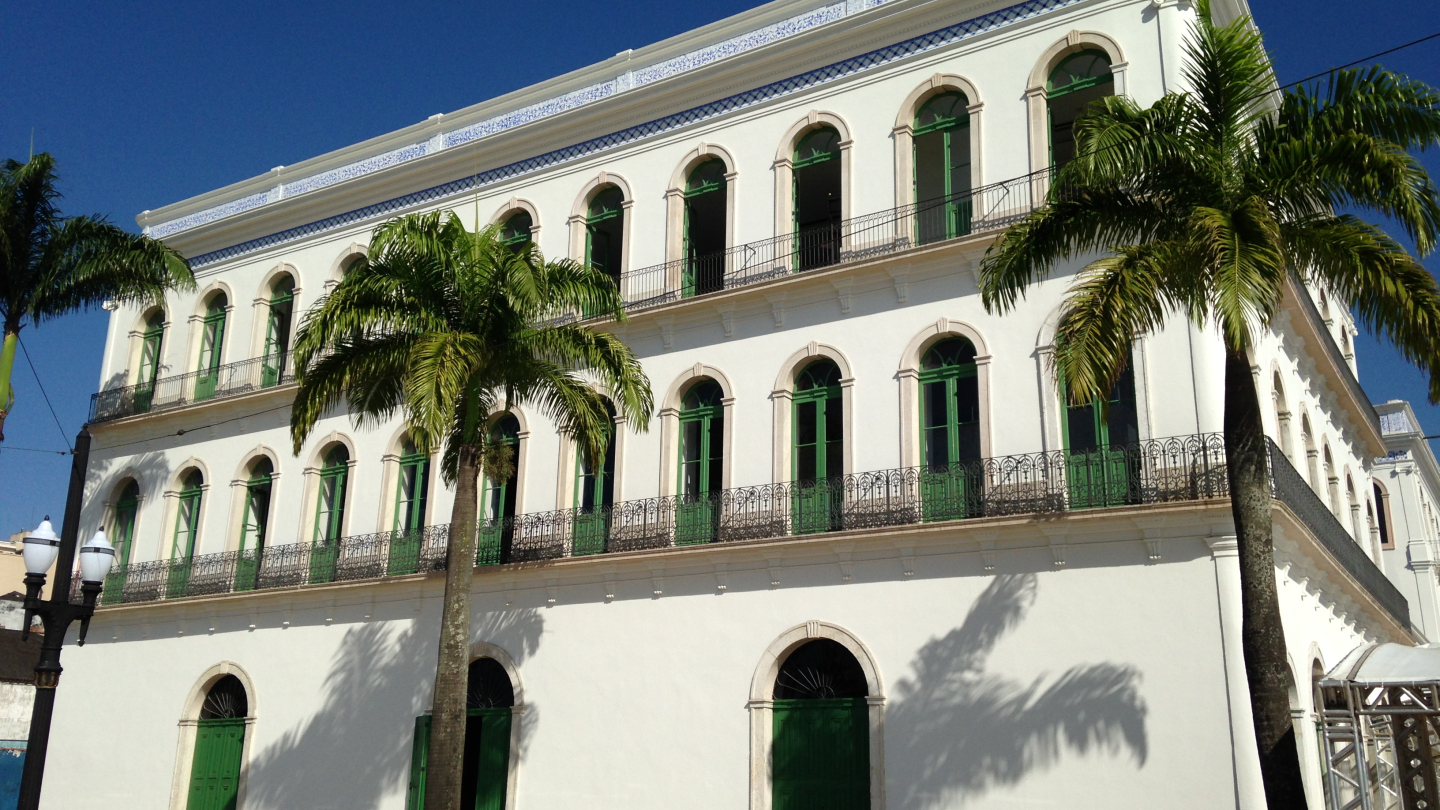
Fachada do Museu Pelé
NOTÍCIAS

Santos recebe franqueados do Clube Turismo para famtour especial

on


A Secretaria de Turismo, Comércio e Empreendedorismo de Santos (Setur), em parceria com o Visite Santos, recebeu nesta segunda-feira (2) parte dos integrantes do Clube Turismo, maior rede de franquias de agências de viagens multimarcas do Brasil. O grupo chegou à Santos um dia antes de um seminário de vendas que acontece a bordo do MSC Sinfonia até o dia 6 de março.

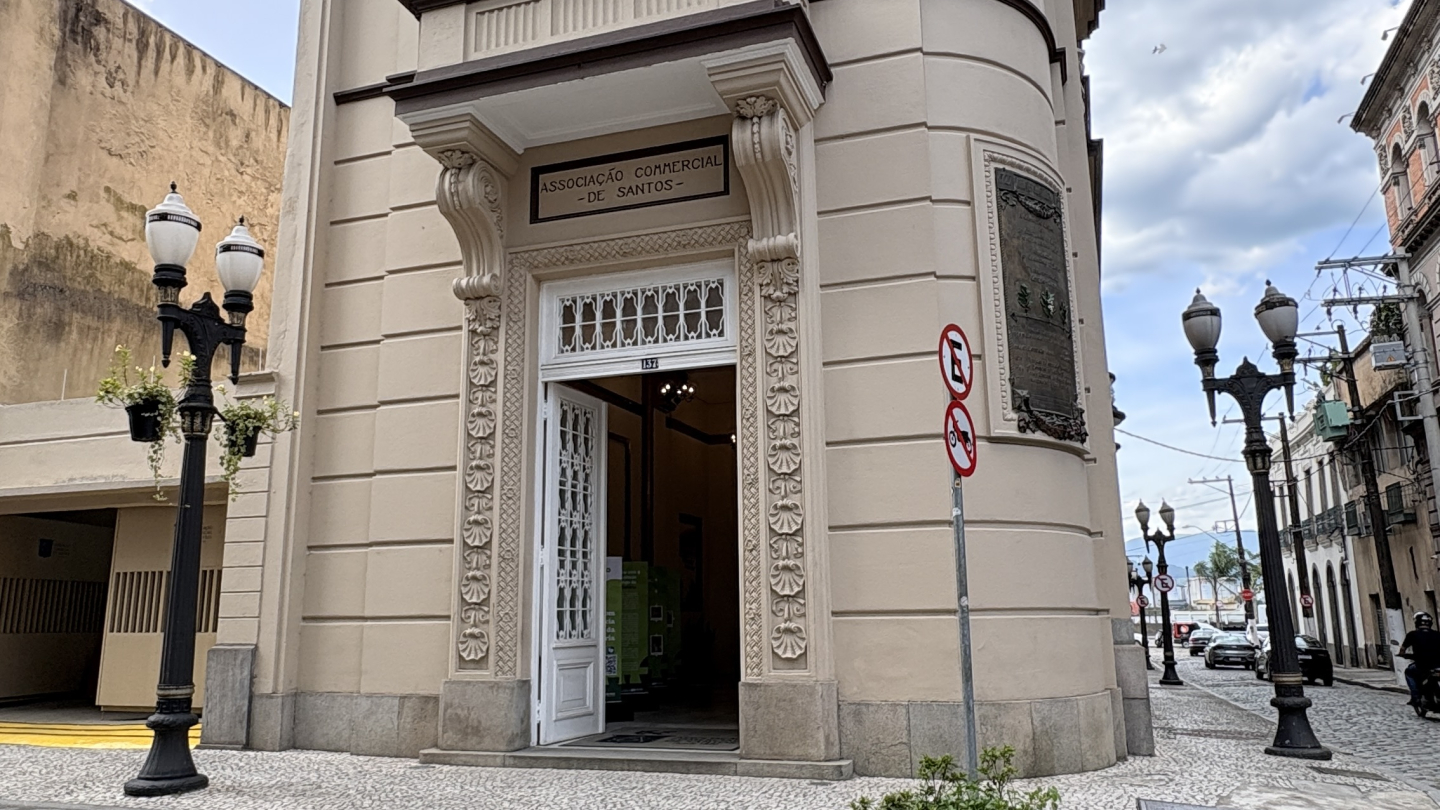
Fachada da Associação Comercial Santos

Santos Commercial Association

Founded on December 22, 1870, the Santos Commercial Association (ACS) is directly linked to the development of the city and the country. Santos was still a colonial city when the institution was created by a group of businessmen to boost the growth of the port of Santos and, along with it, the economy of São Paulo and Brazil. The founders of the ACS and its members were decisive for many of the advances that the people of Santos saw in the following years: the organized port, the first local secondary school, the first opera house, and the first property security institution. An example of the importance of the ACS to Santos is that in 1891, during a political crisis, the population of Santos entrusted the entity with the administrative management of the city for a brief period.

Fachada externa e sinalização de entrada do MISS - Museu da Imagem e do Som de Santos, exibindo murais coloridos e estrutura em concreto

Museum of Image and Sound of Santos

The Museum of Image and Sound of Santos (MISS) was established on November 8, 1996, with the purpose of recording, preserving, and restoring artistic, historical, sociological, and cultural materials of the city. The venue houses rare pieces and an extensive audio and video collection, as well as a digital recording studio, an auditorium, and a screening room.

MISS has a permanent collection of more than 200 objects (including photographic cameras, video cameras, projectors, and sound equipment), a record library with over six thousand vinyl records, and a catalog of films and audiovisual works totaling three thousand titles. All materials are available to the public free of charge.

Since 2014, the Chico Botelho Screening Room has featured an enhanced digital sound and video system, as well as comfortable seating for screenings.

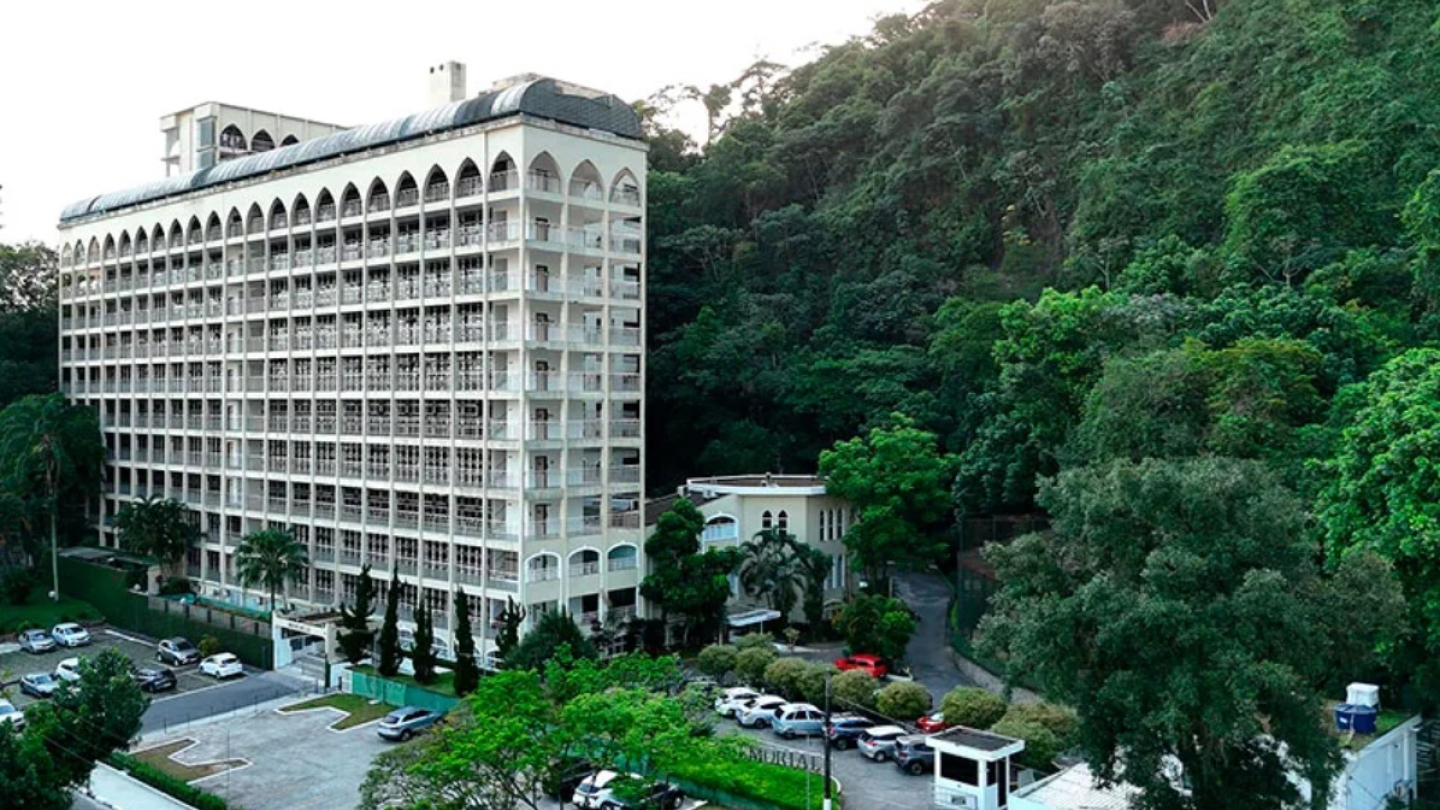
Uma vista aérea mostra um edifício alto e branco com múltiplas varandas em arco, situado ao lado de uma encosta densamente arborizada e um estacionamento

Memorial Necropolis Ecumenical

Built starting in 1983, the Memorial Necrópole Ecumênica is the tallest cemetery in the world, according to the Guinness Book. Today, the site has more than 17,000 niches spread across 14 floors and, with a focus on offering a lighter experience, visitors will also find several shared spaces such as a kids’ area, restaurant, wake room, and chapel.

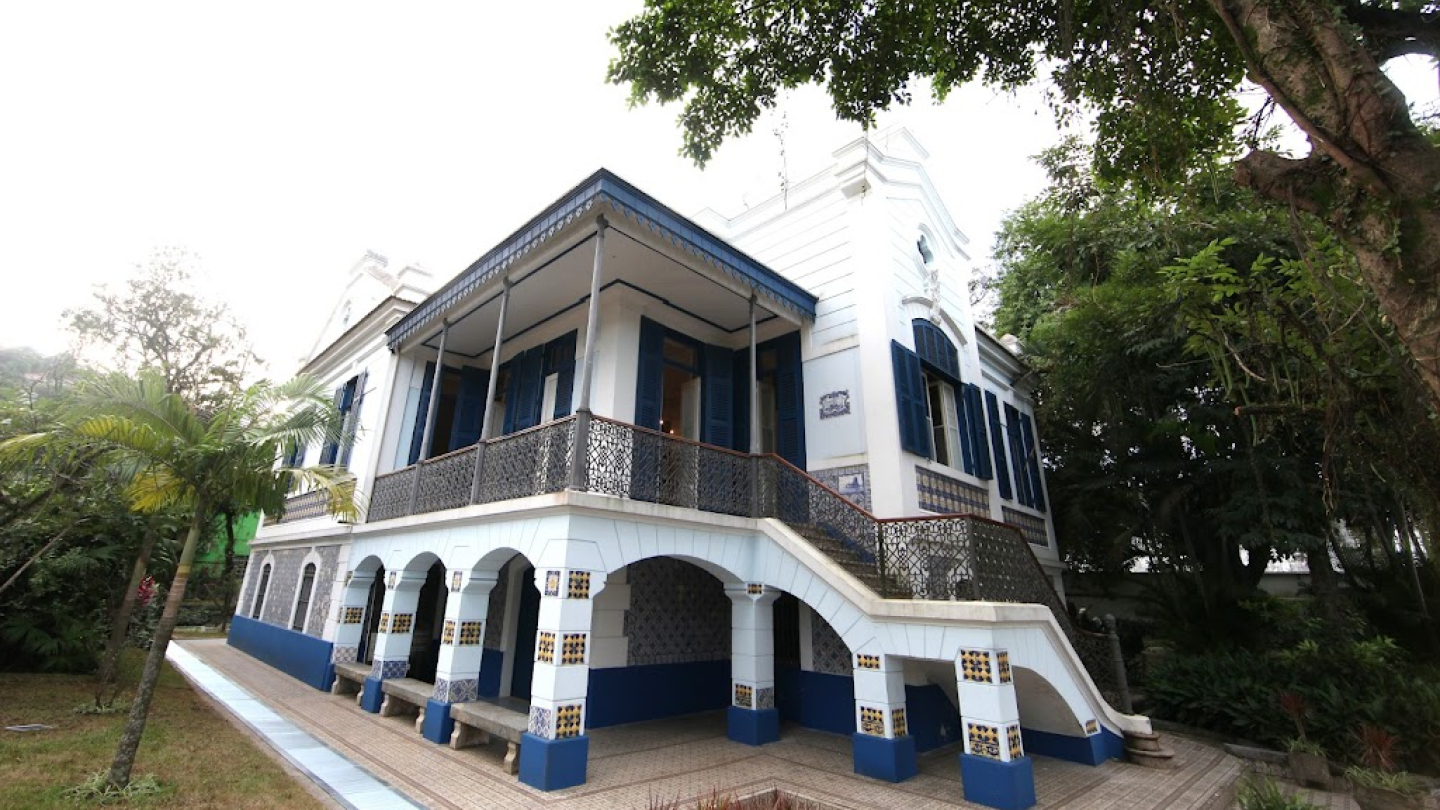
A imagem mostra uma elegante casa histórica de estilo colonial tardio, cercada por vegetação e situada em um terreno arborizado. A construção é marcada por paredes brancas, janelas e portas com venezianas azuis e detalhes decorativos em azulejos, especialmente nas colunas e ao longo da base do prédio.

House of Cultures

The Santos House of Cultures occupies a listed and restored eclectic-style mansion located at Rua Sete de Setembro 49, in Vila Nova, built in 1900 as a residence for employees of the then Santos Dock Company.

Leased by the City Hall, the space will host exhibitions, book launches, literary workshops, and activities of various artistic expressions. Management will be handled by the Secretariat of Culture in partnership with the Santos Archive and Memory Foundation, and curated by Flávio Viegas Amoreira.


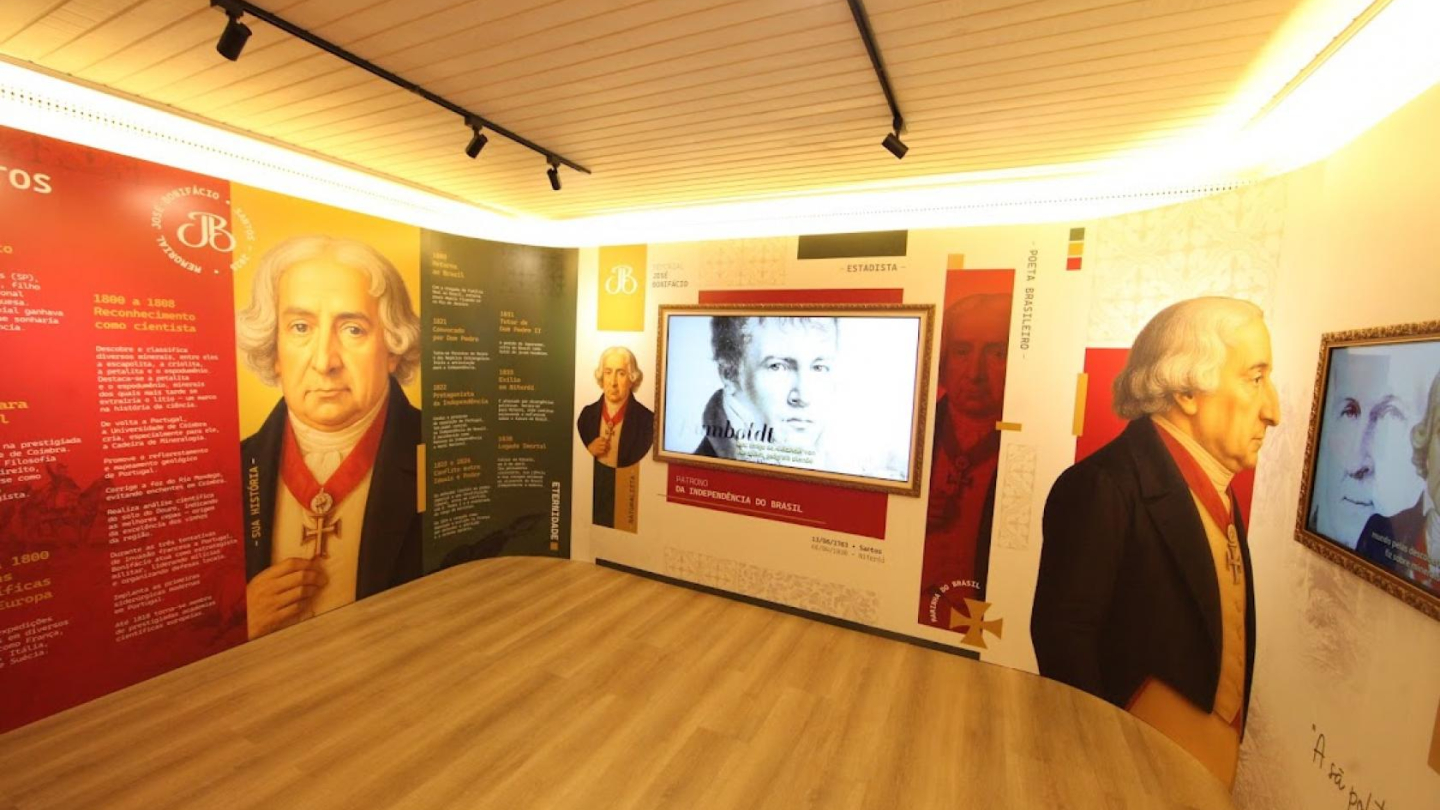
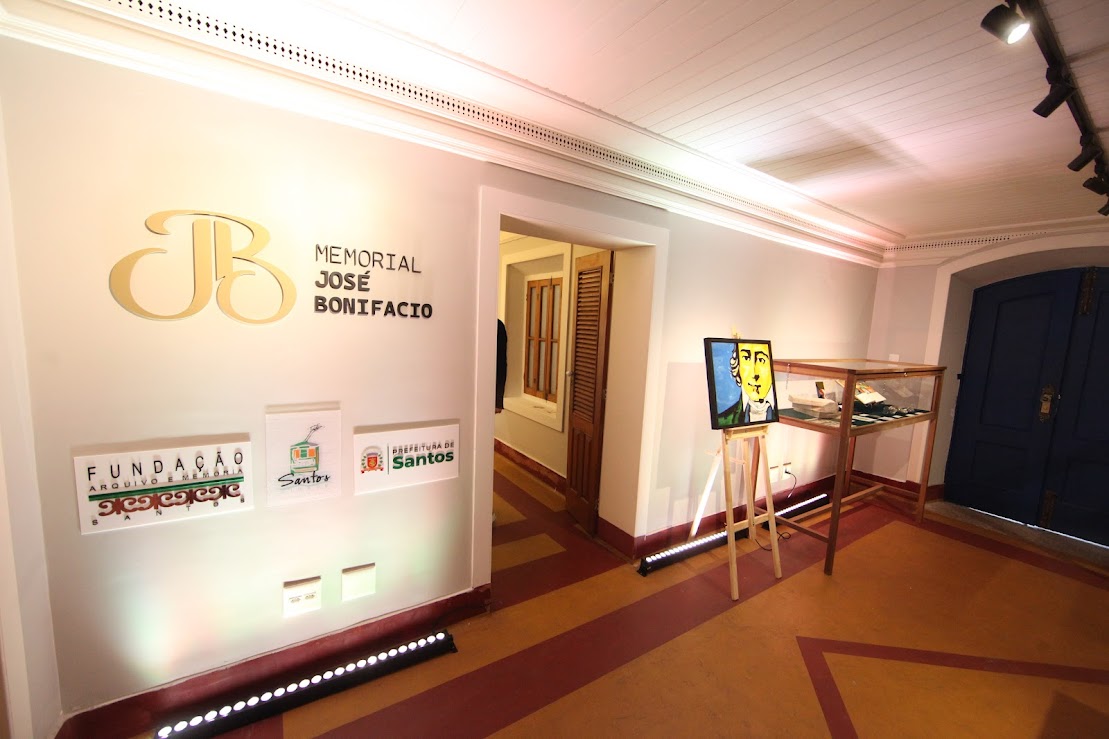
A imagem mostra uma sala de exposição moderna, bem iluminada, dedicada à vida e trajetória de José Bonifácio de Andrada e Silva. As paredes são totalmente envelopadas por painéis coloridos — em tons de vermelho, verde, amarelo e branco — que apresentam textos informativos, datas importantes e títulos que contam diferentes fases de sua atuação, como estadista, cientista e patriota da Independência do Brasil.

José Bonifácio Memorial

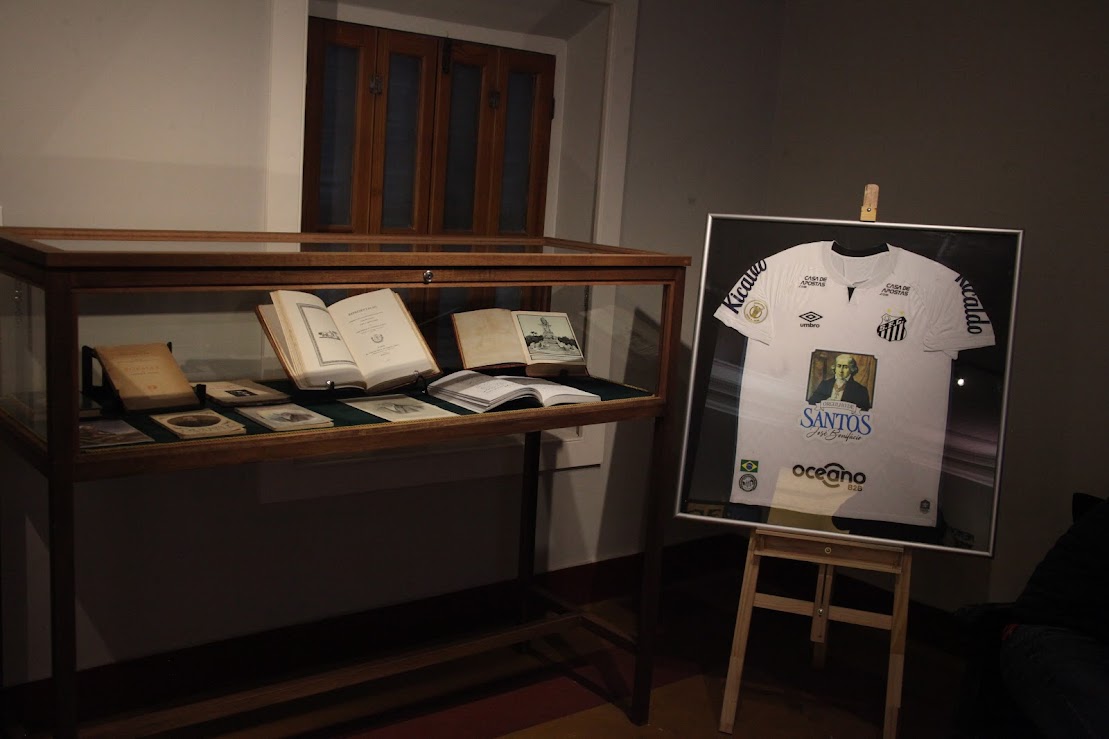
Located in the House of Cultures, the José Bonifácio Memorial now has three rooms dedicated to presenting the unique and surprising history of this saint. The collection includes visual and textual content, videos, and objects such as medals, plaques, books, samples of minerals he discovered, and a bust.

In the very first room, an artificial intelligence animation, produced by the Santos Archive and Memory Foundation (Fams), features José Bonifácio himself welcoming the visitor. In the same space, an augmented reality table presents in detail the monument in homage to the Andradas in Independence Square, in Gonzaga.

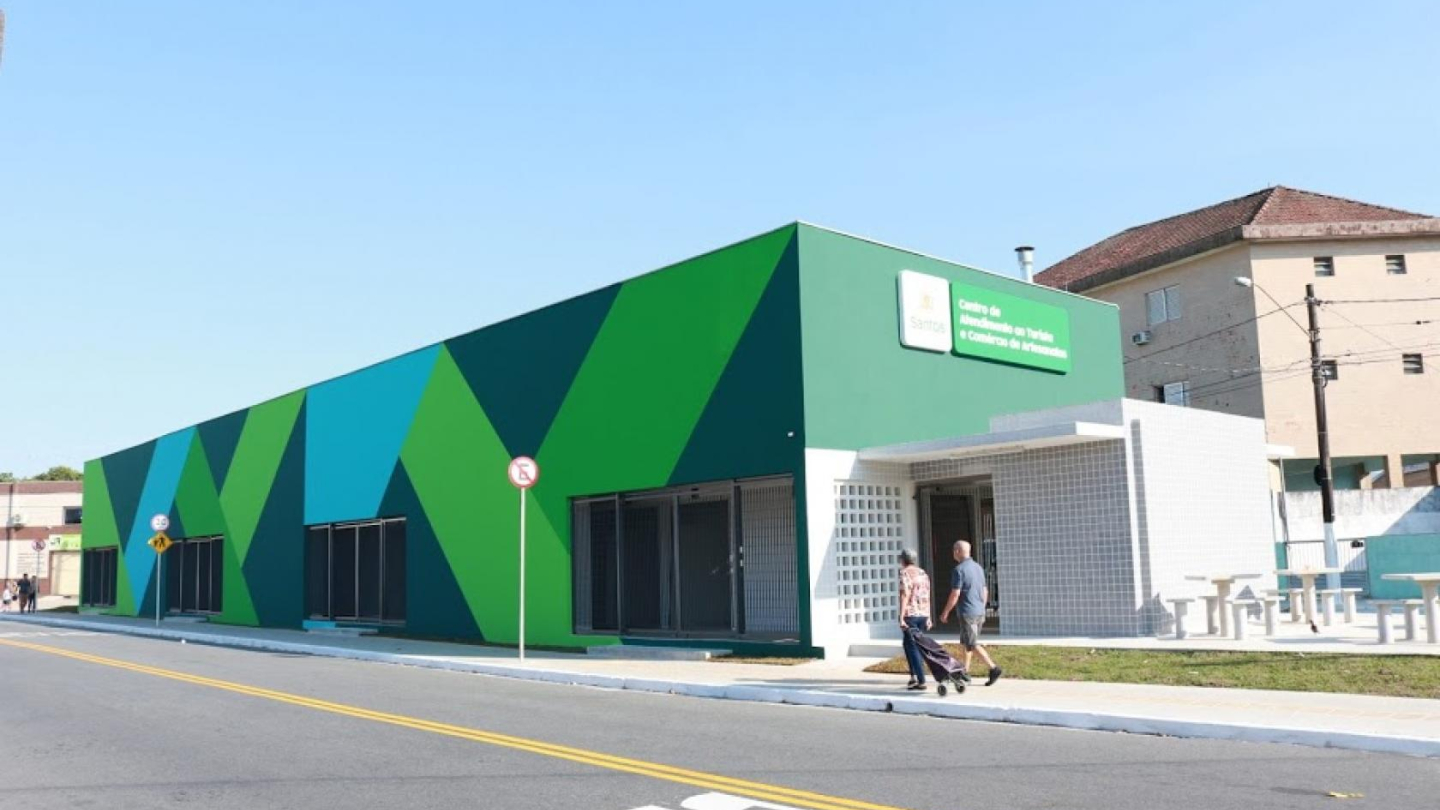
Um edifício moderno de um andar, com fachada decorada em tons geométricos de verde e azul, exibe uma placa indicando ser um "Centro de Atividades", em um dia ensolarado

Northwest Zone Tourist Information and Handicraft Trade Center

The Northwest Zone Tourist Information and Handicraft Trade Center (CATZNO), also known as 'Camelódromo', is occupied by residents of the Northwest Zone itself and has 40 stalls, 38 shops selling various products, and two snack bars. Located at Praça Bruno Barbosa s/nº (Castelo), the space offers a wide variety of products for visitors, including clothing, footwear, toys, and electronics.

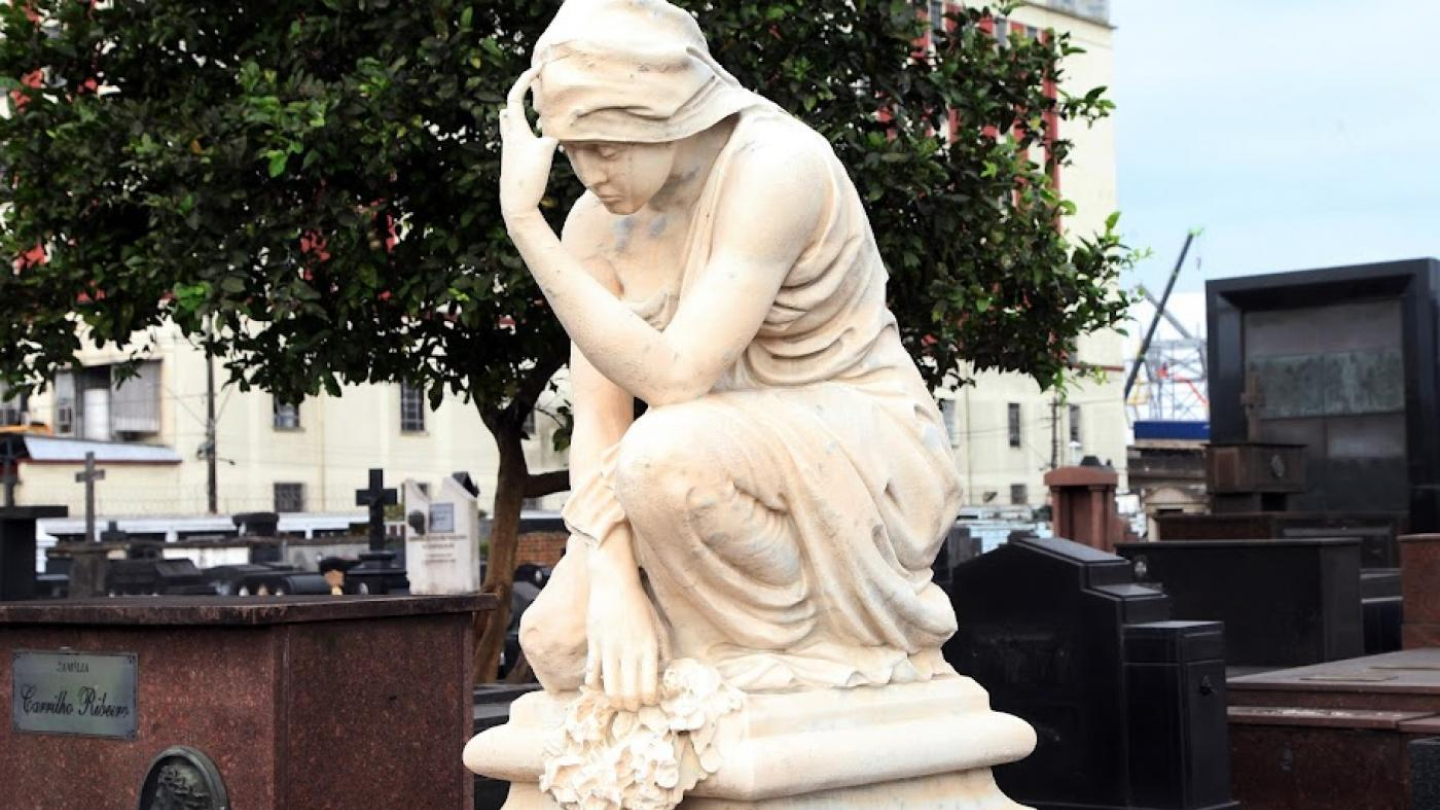
Escultura de mulher em posição pensativa, feita em mármore branco, localizada no cemitério do Paquetá

Paquetá Cemetery

In the mid-1800s, residents of Santos with limited means were buried in a plot of land behind the Sanctuary of Saint Anthony of Valongo. Wealthier families, who made generous contributions to the Church, held their burials inside other churches. This reality changed on November 30, 1854, with the inauguration of the first municipal cemetery in Santos — Paquetá Cemetery — which became the city’s main burial ground.