Sitting on top of Monte Serrat, 157 meters above sea level, this sanctuary affords a 3600 panorama of the entire city and partial view of the municipalities of São Vicente, Cubatão, Guarujá and Praia Grande. The statue of Nossa Senhora do Monte Serrat, patron saint of Santos, whose saint’s day is celebrated on September 8th, and the stories of her miracles are the big attractions here in the heart of the city. The chapel was built between 1598 and 1603, and access to the sanctuary is by funicular railway or by 415 steps, with 14 niches representing the Way of Sorrows.
Monte Serrrat received its name in 1604, by order of then governor Dom Francisco de Souza, a Spaniard devoted to Our Lady, patron saint of Barcelona, one year after the chapel was built. Up to then, it had been called Morro de São Jerônimo. It is said that in 1614, when Dutch pirate Joris von Spielbergen invaded the settlement, part of the population fled to the top of the hill. While attempting to follow them, the pirates were buried by the avalanche of earth and stones that fell from the mountain. The people considered this a miracle performed by Nossa Senhora do Monte Serrat, and she thus became the city’s patron saint.
The funicular railway opened in 1927 with the inauguration of the function room and restaurant on Monte Serrat. In addition to its terraces and lookout point, the property saw the opening of the Monte Serrat Casino in 1934, hosting such artists as Carmen Miranda, Francisco Alves and Sílvio Caldas until its closure in 1946, when President Gaspar Dutra banned gambling in Brazil. Restored in 1998, the building now offers a café and areas for social and cultural events.
Nossa Senhora do Monte Serrat Sanctuary
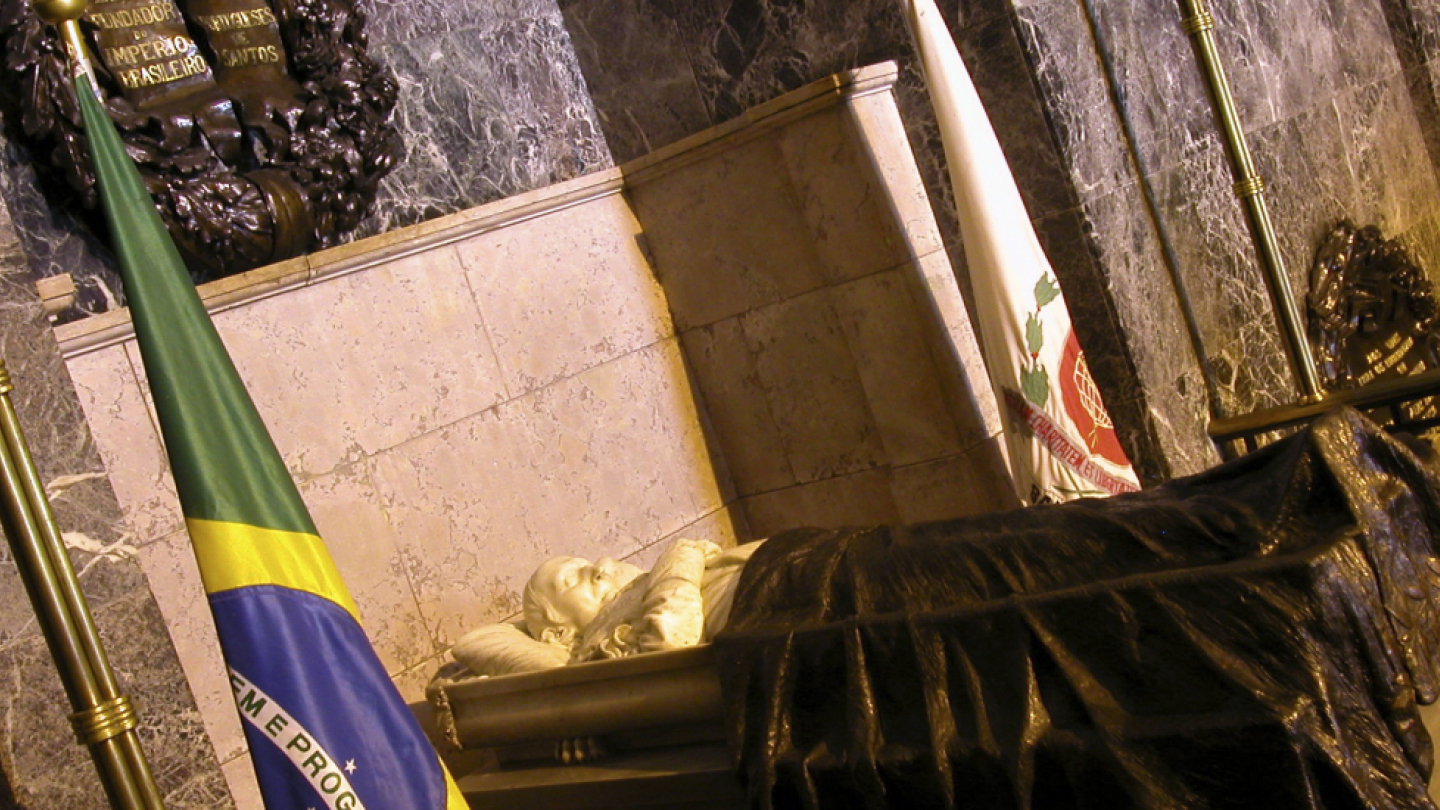
Andrada Pantheon
Top photo: Tadeu Nascimento
The resting place of the ashes of José Bonifácio de Andrada e Silva, the ‘Father of Independence”, and his brothers Antonio Carlos, Martim Francisco and Father Patrício Manuel, the pantheon was inaugurated on 7 September, 1923. The civic monument occupies the space of the old of the Carmo Convent gatehouse and consists of the monument designed by sculptor Rodolfo Bernardelli, made in Italy – the pieces arrived in 19 boxes, were then auctioned because of customs issues and acquired by merchants and by the Humanitarian Society of Santos.
José Bonifácio Palace
Top photo: Tadeu Nascimento
The seat of Santos City Hall, the Palácio José Bonifácio honors one of the most illustrious Santos residents, José Bonifácio, the Father of Brazilian Independence. With statues of Mercury and Minerva at the entrance, the building, constructed during the coffee boom years, is one of the few public buildings in São Paulo State that still has its original structure and most of its décor preserved.
The Palace is full of symbolism, which refers to the philosophical past and historical importance of José Bonifácio de Andrada e Silva. Inaugurated in January, 1939, after two years of building work, it is the fifth seat of Legislative Power – and the first to have its own building. Occupying a site of 2847.15m², the seven-story building weighs around 12,000 tons and was constructed with 2,050,000 bricks.
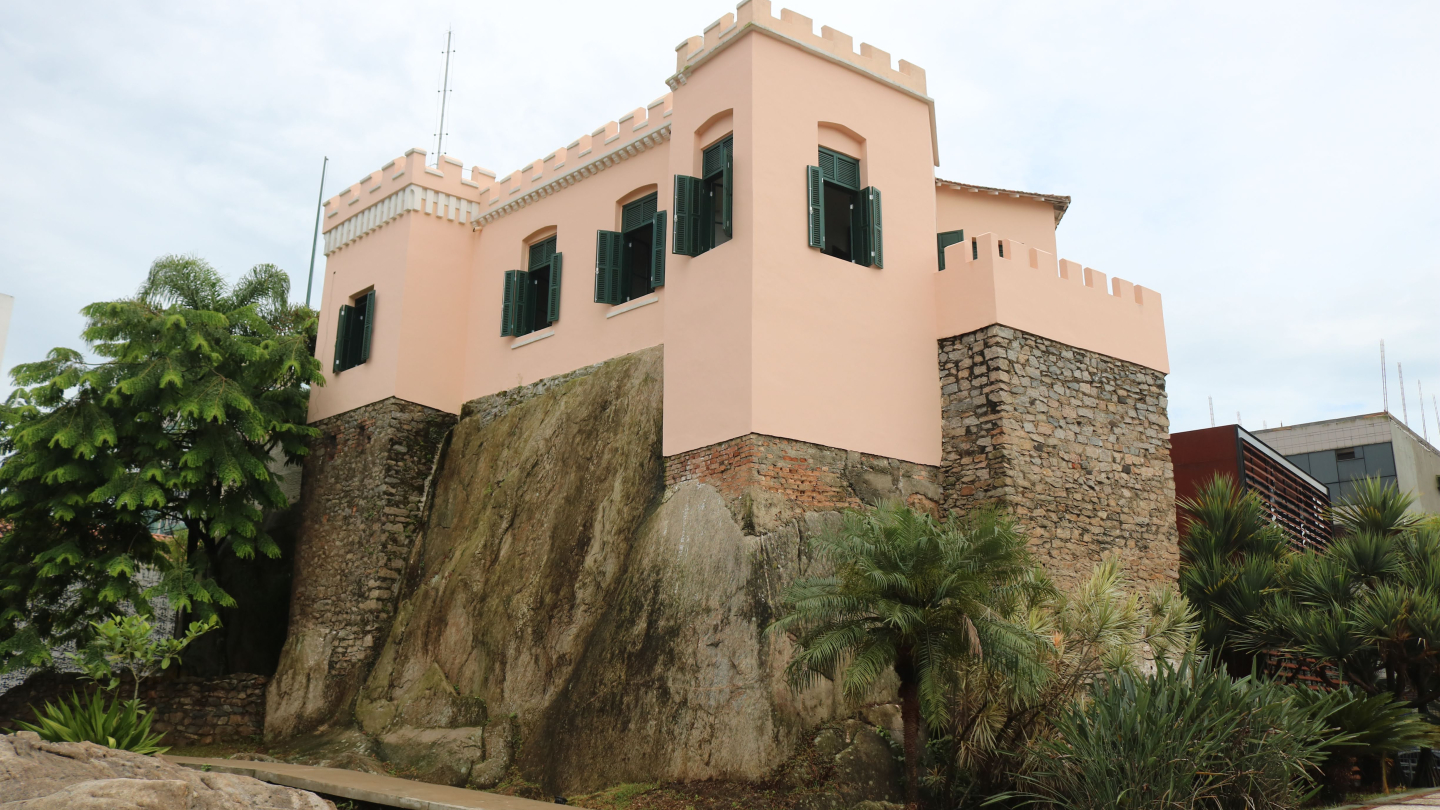
Saint Catherine’s Mount
Top photo: Tadeu Nascimento
Saint Catherine’s Mount marks the foundation of Santos – knowing the exact spot of its foundation is a privilege that few cities in the world enjoy. This small mount bears the name of the chapel that existed at the foot of this small hill, built in 1532.
In 1591, English pirate Thomas Cavendish sacked the city, destroyed the chapel and threw the statue of Saint Catherine of Alexandria into the sea. After 72 years, while fishing with a net, Jesuit slaves happened to take the statue out of the water by chance.
The first Santa Casa de Misericórdia hospital in Brazil was installed next to the chapel in 1543. For years the mount supplied stones for the paving of the roads and extension of the port.
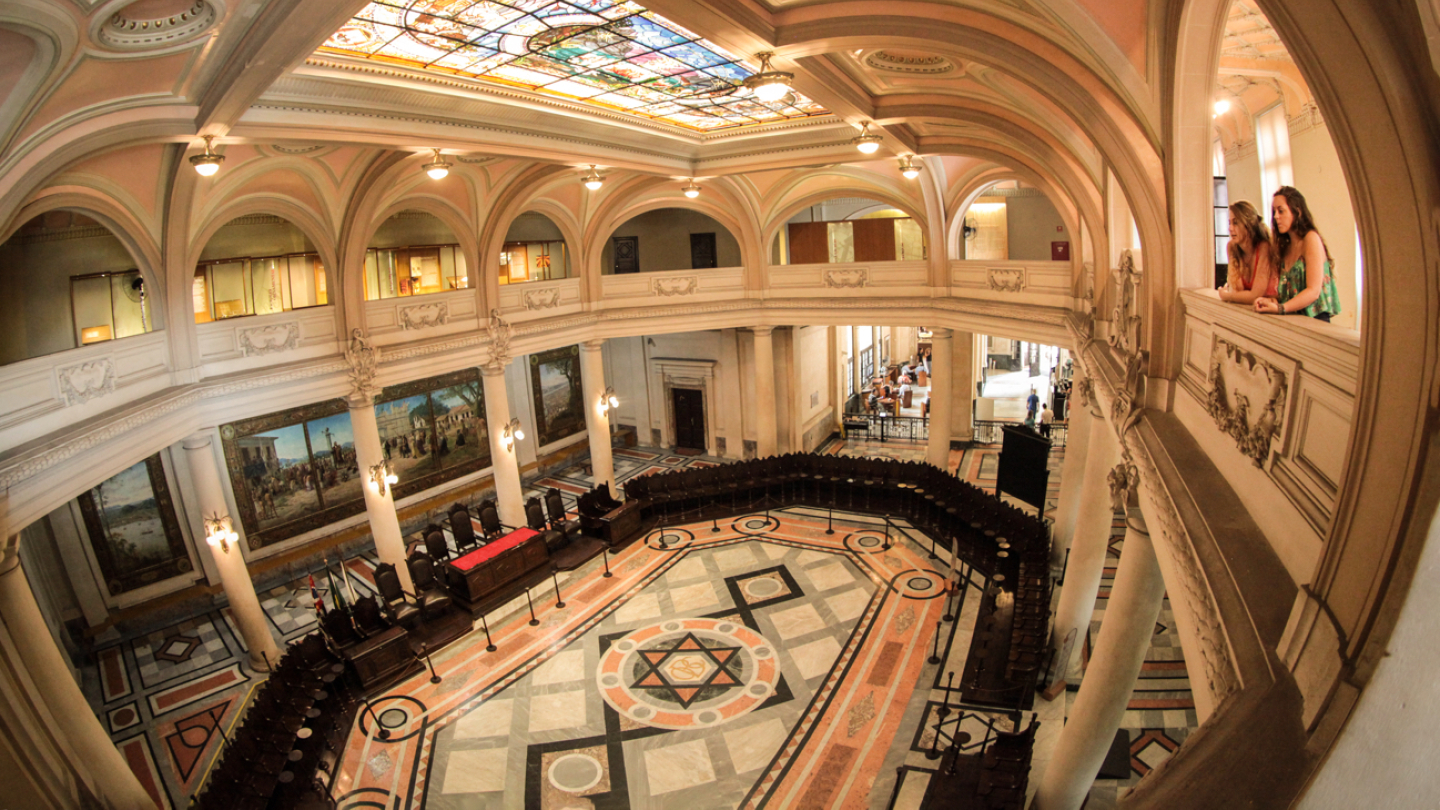
Coffee Museum
Top photo: Tadeu Nascimento
A place that brings together tradition, architecture, history, flavors and aromas. Installed in an eclectic-style building, with an area of 6,000 m² and more than 200 doors and windows, the Coffee Museum, inaugurated in 1998, is much more than a tourist attraction that showcases the number one Brazilian export at the end of the 19th century. It is an experience of various sensations, from the cultivation of the bean to the consolidation of coffee as one of the national symbols. Permanent and temporary exhibitions, works of art, period furniture, themed shop and a café serving the best coffee beans – including the most expensive and rarest in the country – are some of its many attractions.
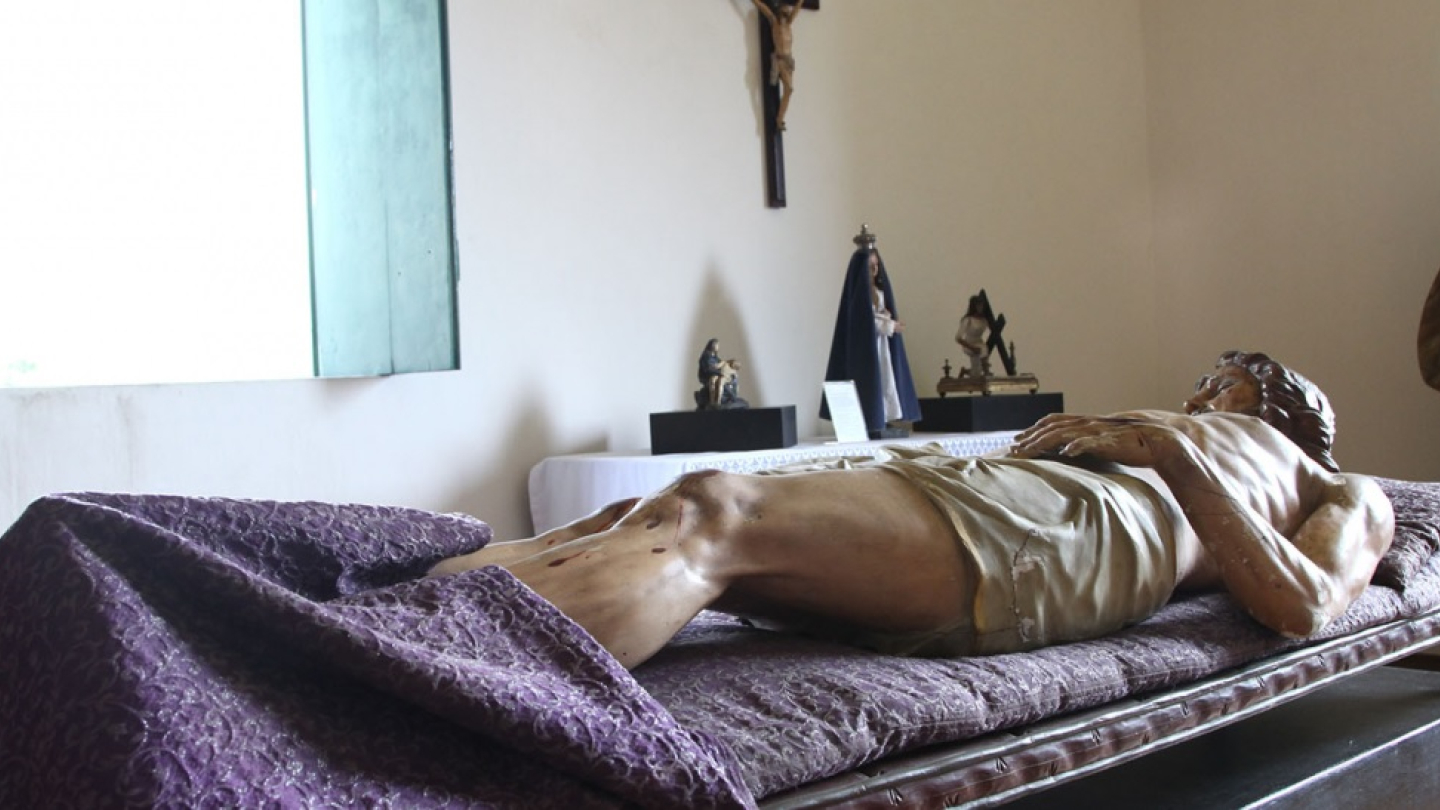
Museum of Sacred Art
Top photo: Francisco Arrais
The Benedictine architectural complex composed of the Igreja Nossa Senhora do Desterro (Our Lady of Exile Church) and the old São Bento (Saint Benedict) Monastery is the Santos Museum of Sacred Art today. It was inaugurated on June 11, 1981, on the initiative of the then Diocesan Bishop Dom David Picão.
The collection brings together more than 600 sacred and religious pieces, both erudite and popular, from the 16th to the 20th century, including sculptures, paintings, liturgical objects and vestments. The oldest statue in Brazil with a known artist is part of the collection: Our Lady of the Conception, dated 1560, by João Gonçalo Fernandes.
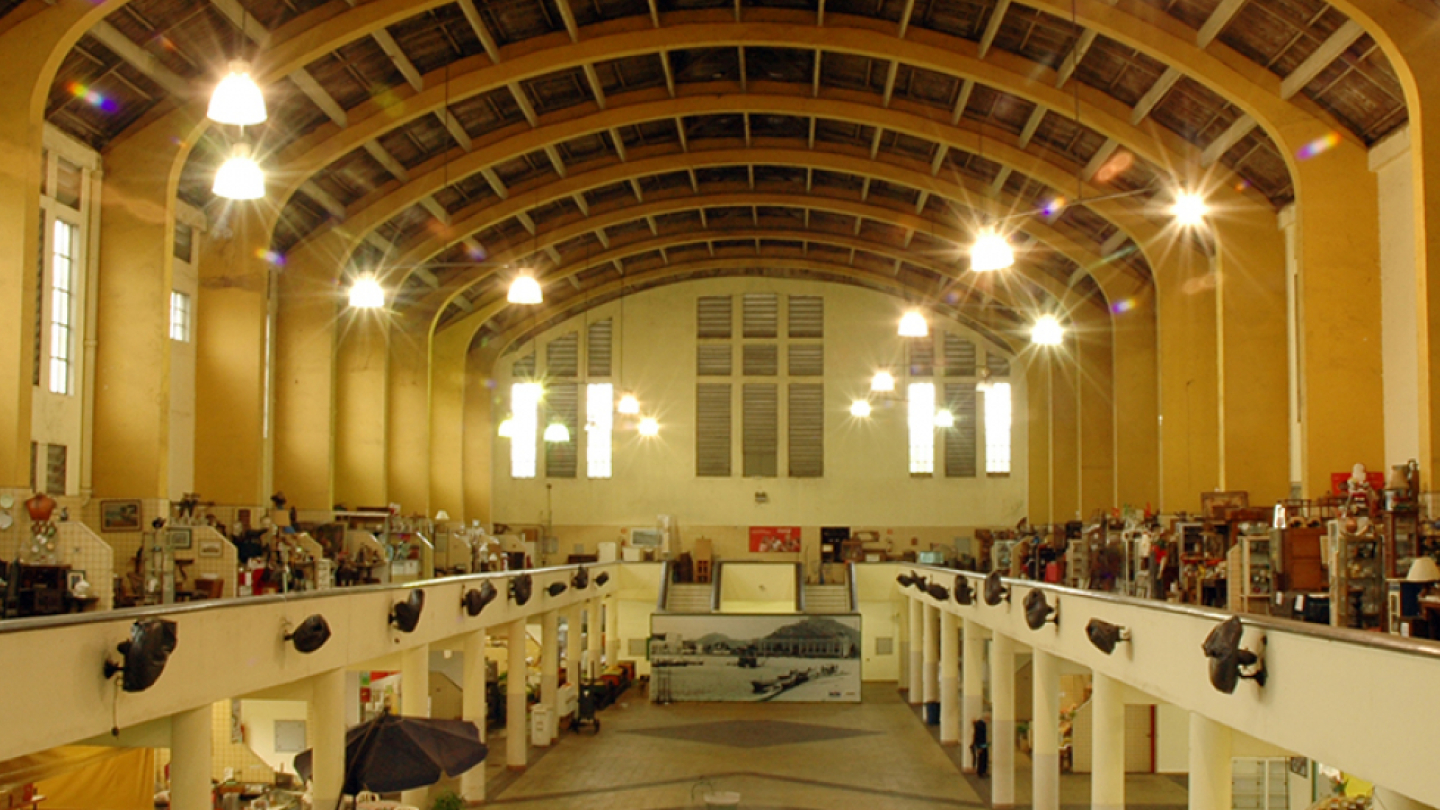
Municipal market
Top photo: Francisco Arrais
Built in 1902 to house two establishments of the type that operated in the city, the Mercado Municipal was originally castellated in style. Rebuilt in 1947, it was extended in 1955, when it gained a second floor and a fish pavilion.
The market boasts 54 stalls selling meat, fruit and vegetables, groceries, fish and Japanese items, all offering products wholesale and retail, in addition to a restaurant. It holds regular events, craft fairs, festivities and festivals.
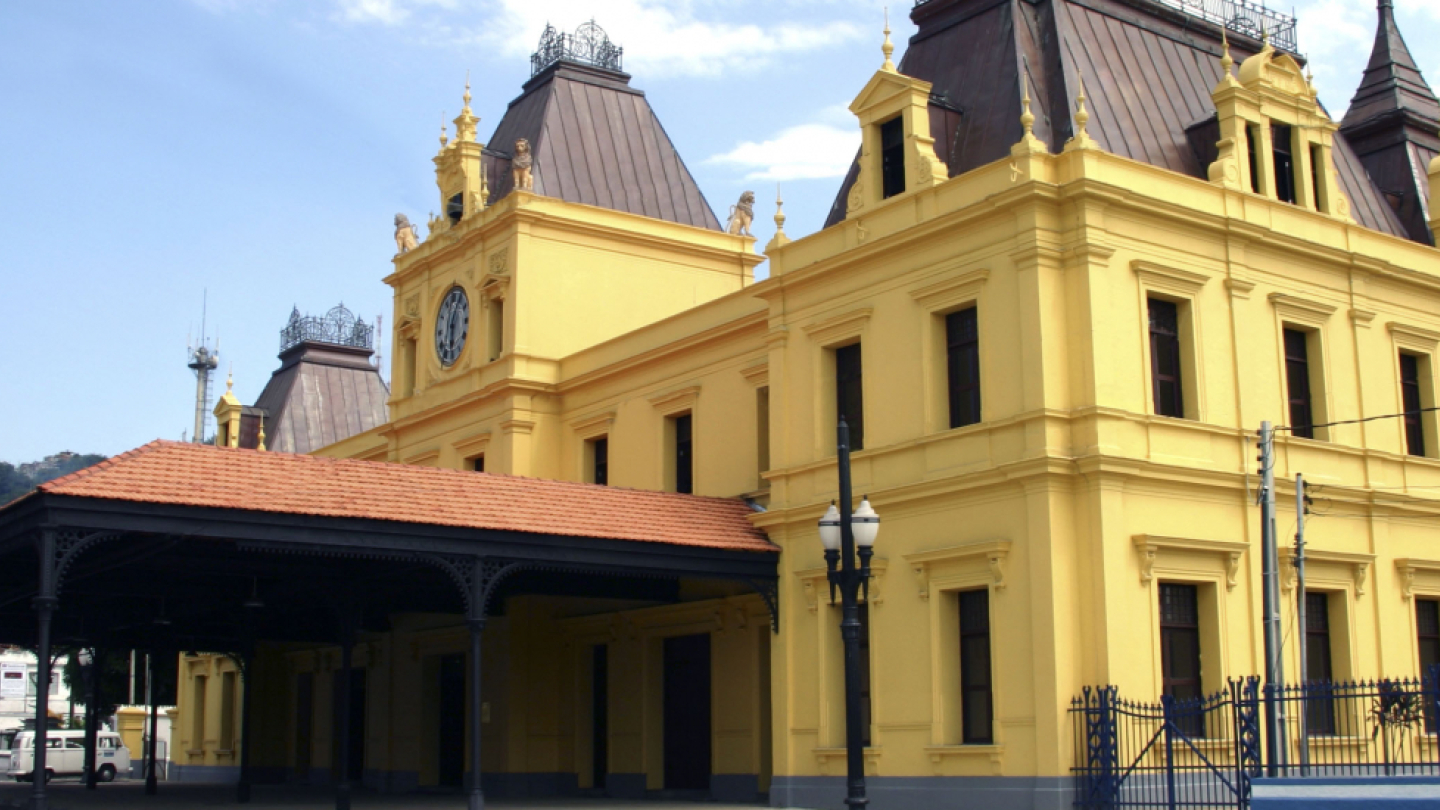
Valongo Station
Top photo: Anderson Bianchi
A true architectural treasure, Valongo was the first station in São Paulo State to hear a train whistle. The station was designed in England and inaugurated in 1867 by the São Paulo Railway, with neo-classical lines inspired by London’s Victoria station, and it is the only building in Santos prepared for snow (!).
The building was constructed on the initiative of Irineu Evangelista de Souza, Baron Mauá, to serve the São Paulo-Santos line, one of first in Brazil. This railway line is considered one of the greatest railway engineering works in the world because of the steep nature of the Serra do Mar Range and the eight-kilometer route, which resembles a slow-motion roller coaster.
Carmo Convent Complex
Top photo: Tadeu Nascimento
A national heritage site since 1940, Conjunto do Carmo, comprising two churches, is considered one of the oldest religious examples of Brazilian baroque. The 18th-century Venerável Ordem Terceira do Carmo church, built by a lay order, is distinguished by its wooden rococo altars, paintings by friar Jesuíno do Monte Carmelo (1764-1819), and by the holy water font, built in 1710. The side altars bear images of Christ on the Way of Sorrows and are considered the most important in the Santos Bay Area for the uniformity of their style. Thanks to these images, the church, consecrated on April 8th, 1760, is known as the Church of the Passion of Christ. Next door stands the Carmelite Convent Church, dating from 1599. The gilded wood altars are in baroque style, adorned with 18th-century devotional images. The presbytery has jacaranda wood pews, used when the brothers make their devotions. Other highlights in this church are the paintings by Benedito Calixto and the very fine candle-holders. The churches are linked by a bell-tower, creating an unusual façade in baroque art, covered by original 19th-century tiles depiciting scenes of Our Lady.
Tuiuti Mansion
Also known as Palacete Mauá, this is the oldest residential building in Santos and today is used for commercial purposes. Built in 1818, it is 3,000m2 in area and has undergone much restoration work without great alterations to its architectural features.
It was originally occupied by traditional Santos families, among them José Antonio Vieira de Carvalho, governor of Itapema Fort and also a judge, councilor and Local Council president, when this post was equivalent to that of mayor. It was here on March 4th, 1822, that the grandest, most opulent ball in 19th-century Santos was held, ‘the Feast of the Meteors’.
Today the building is used for events and cultural activities. At one time, it housed the main branch of Mauá, Santos and Mercantile bans, as well as being used to billet Imperial troops during the Paraguay War. In 1887, the north-American export company Hard Rand took over the mansion, extended it and operated from there from 1922.
In the 1980s the building was used as a location for filming of the soap opera Os Imigrantes, broadcast by TV Bandeirantes.