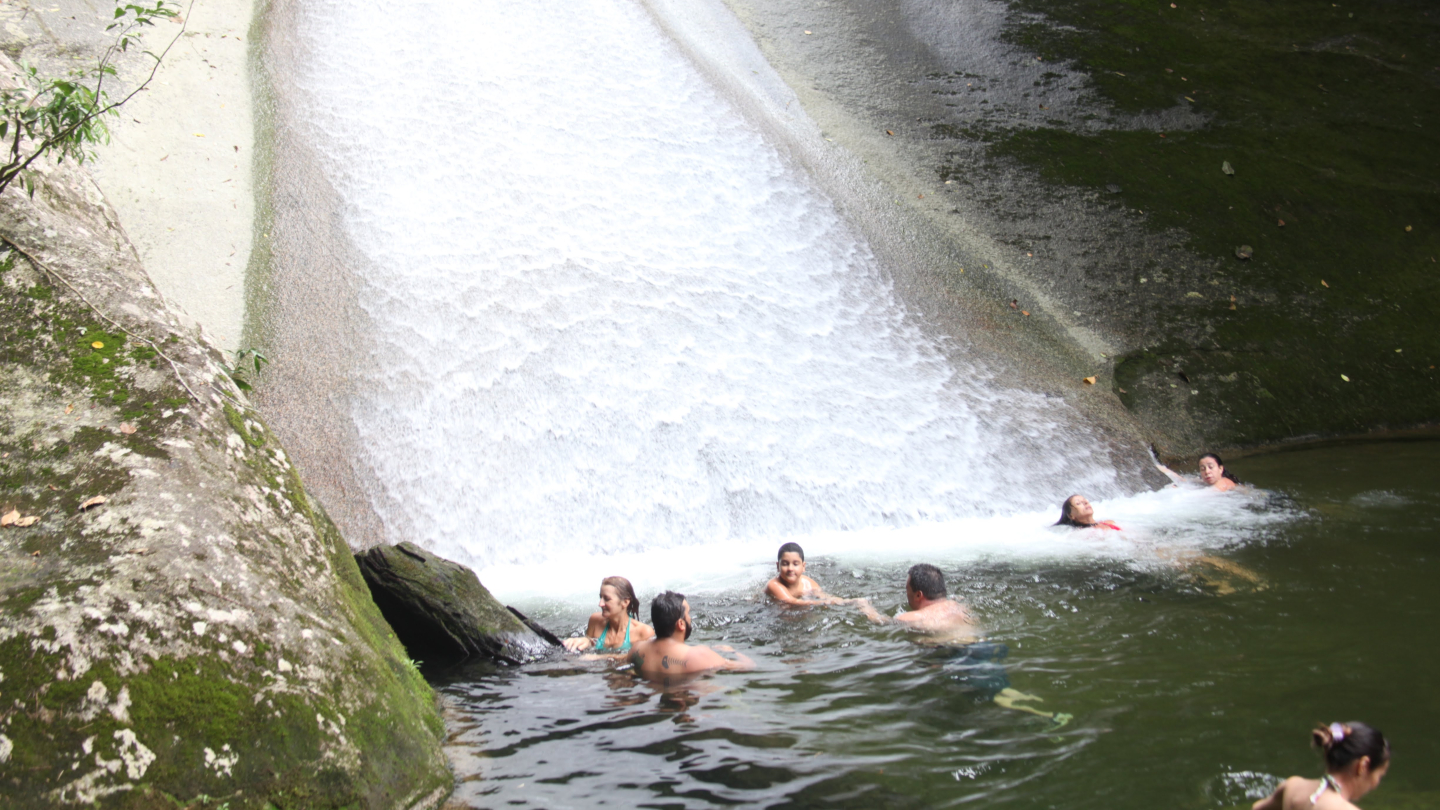
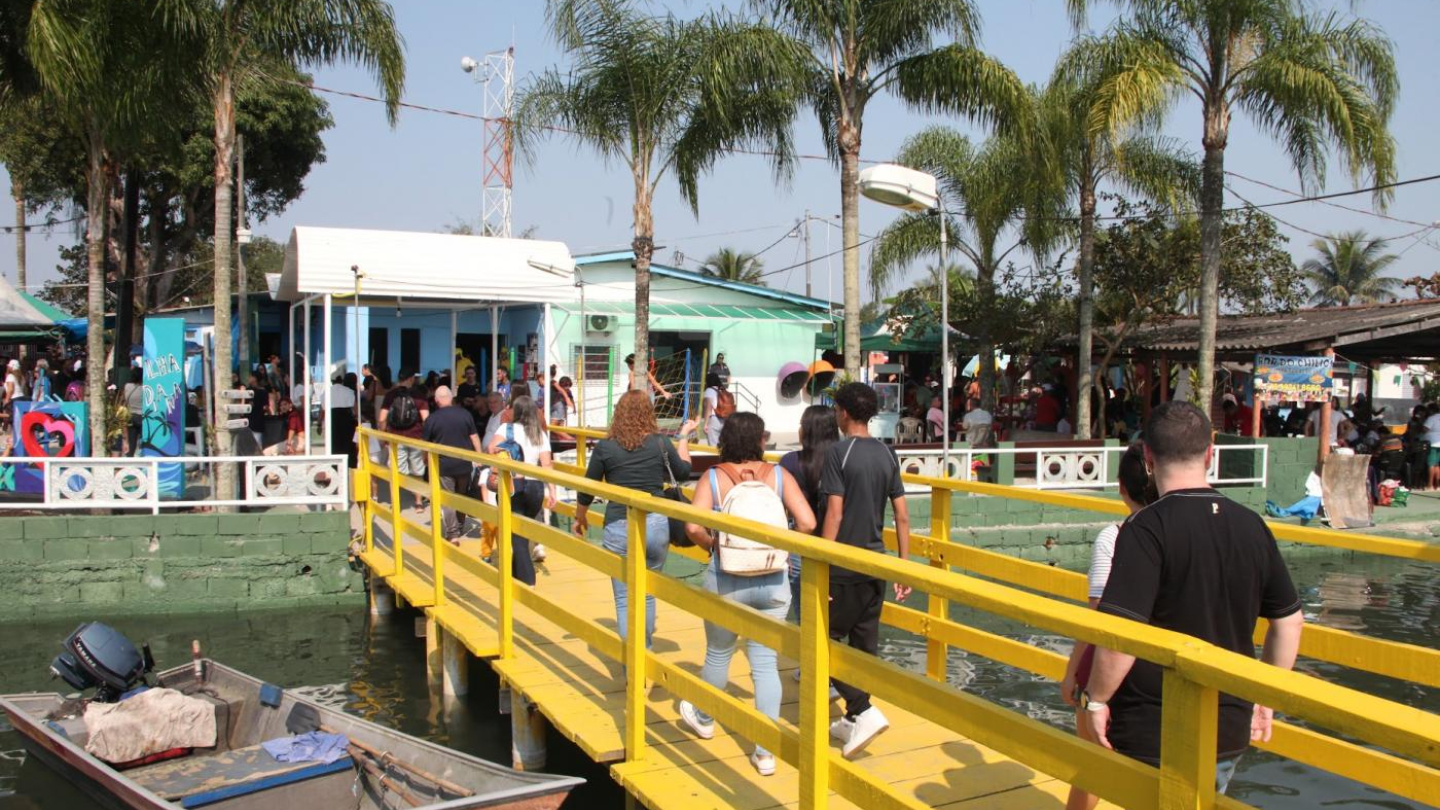
Top photo: Santos City Hall photo archive
Ilha Diana is a fishermen’s enclave that proudly preserves Caiçara culture and cuisine, offering an authentic experience for those seeking a connection with nature, tradition, and the local way of life.
One of the community’s cultural landmarks is the traditional Feast in devotion to Bom Jesus da Ilha Diana, an annual celebration held at the local church, reinforcing the residents’ faith and identity.
Sustainable tourism and environmental education
Surrounded by mangroves, the island invites visitors to slow down and experience a place where culture, sustainability, and respect for the environment go hand in hand. Scheduled tours are led by local residents, encouraging knowledge exchange and income generation for the community.
On weekends, the island becomes even more lively. In addition to tours through the meanders of the estuary channel, the community offers bar and restaurant services, with typical dishes and snacks prepared with Caiçara identity.
🍽 Quiosque As Guerreiras – open Tuesday to Sunday (or by appointment for groups), from 12 p.m. to 12 a.m.
Snacks and meals.
Contact: Sara +55 (13) 97401-0251.
🍽 Bar and Restaurant Chilico – Monday to Friday, from 8 a.m. to 7 p.m.; Saturdays and Sundays, from 10 a.m. to 6 p.m.
Snacks, meals, and boat tours with a local guide.
Contact: Patrícia +55 (13) 99741-8690.
🍽 Cantinho Verde da Zazá – service by appointment.
Snacks and meals.
Contact: Zaíra +55 (13) 98148-1414.
🍽 Quintal Caiçara – service by appointment.
Snacks and meals.
Contact: Jéssika +55 (13) 97408-9700.
🚤 Estrela do Mar – boat tours with a local guide, snacks, and meals.
Contact: Wellington +55 (13) 97422-9431 or Elisa +55 (13) 97408-3130.
🍽 Sabor Caiçara – Service by appointment only.
🎣 Sport fishing with a local guide and meals included.
Contact: Flávia – (13) 99115-1538 | Chocolate – (13) 99108-9433.
Tour bookings for school groups, excursions, and similar activities:
Adriana +55 (13) 99664-0561
Ângela +55 (13) 99147-1470
Graziela +55 (13) 99676-7220
Sônia +55 (13) 99211-7387
Vinicius +55 (13) 99190-6508